
Last updated November 15, 2026
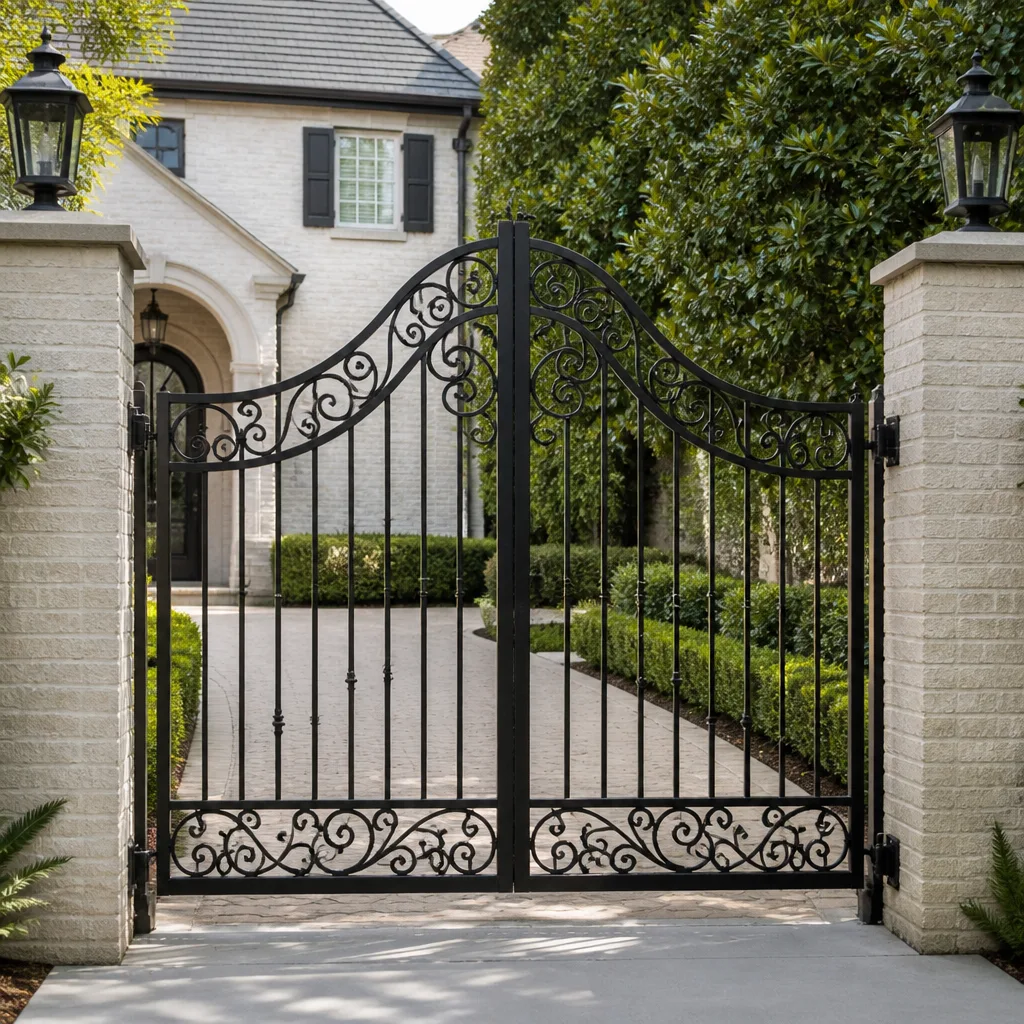 Wrought iron
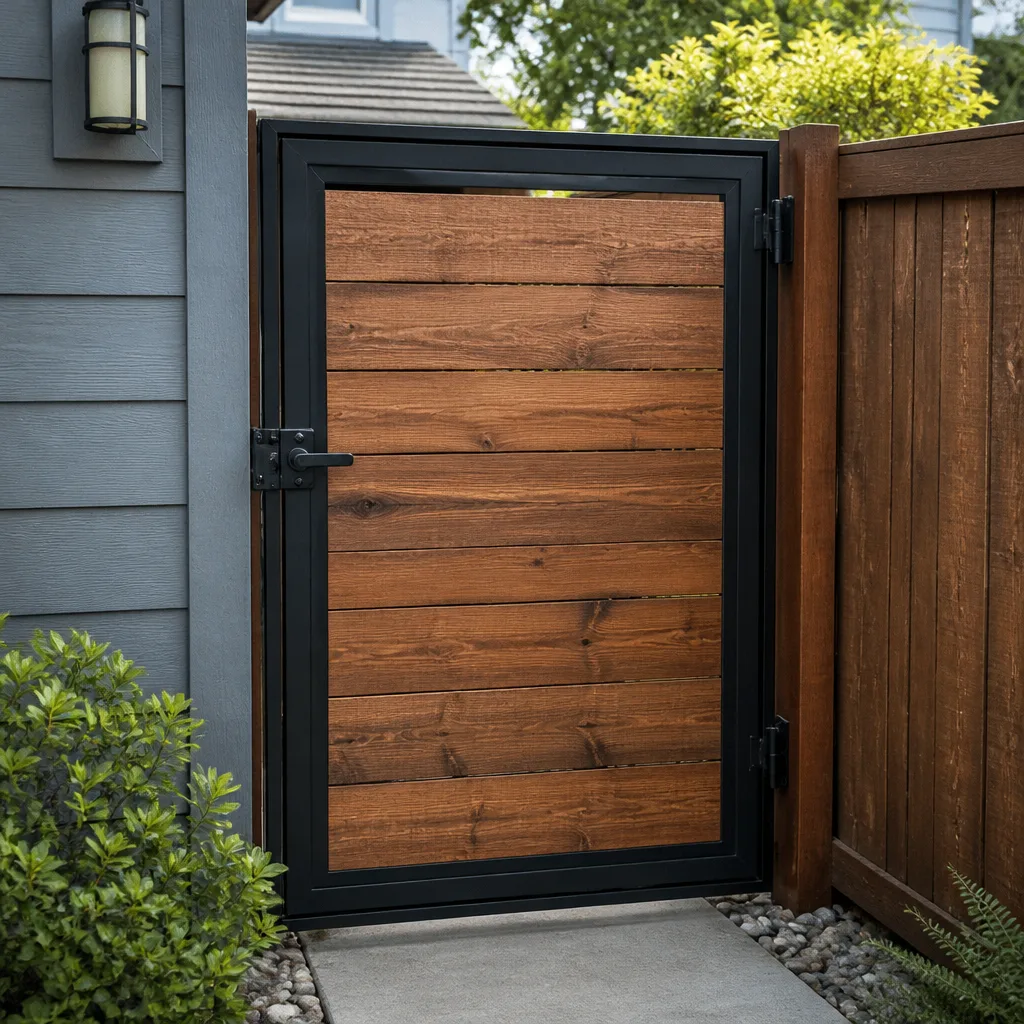 Wood & steel frame
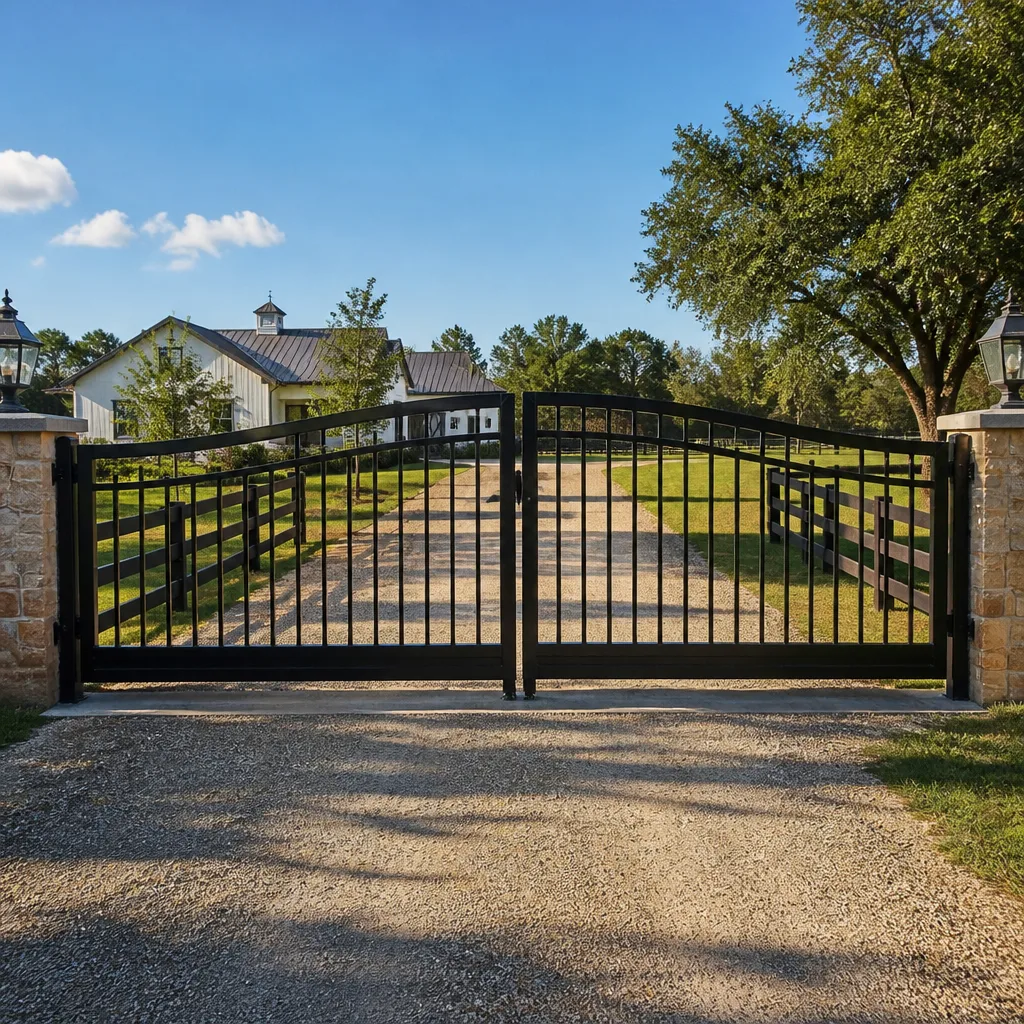 Farm & ranch
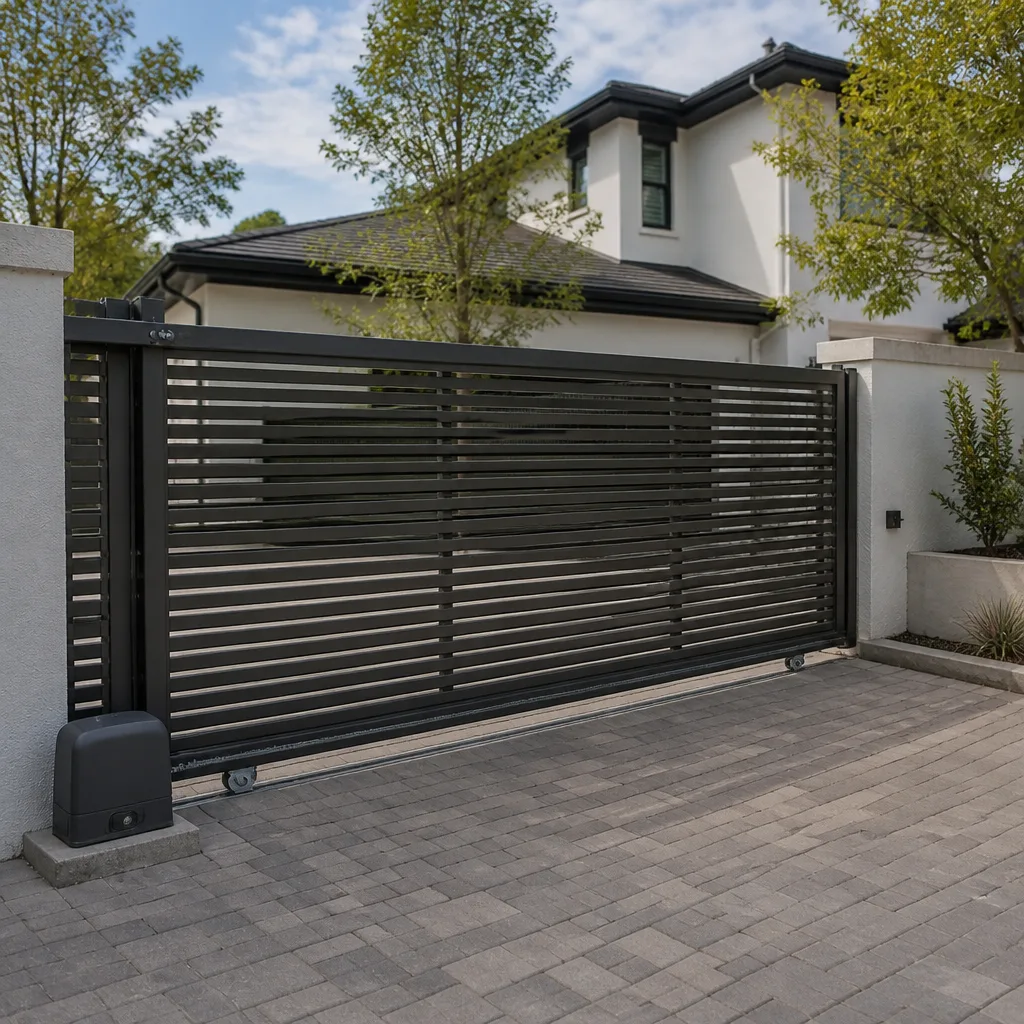 Sliding driveway gates
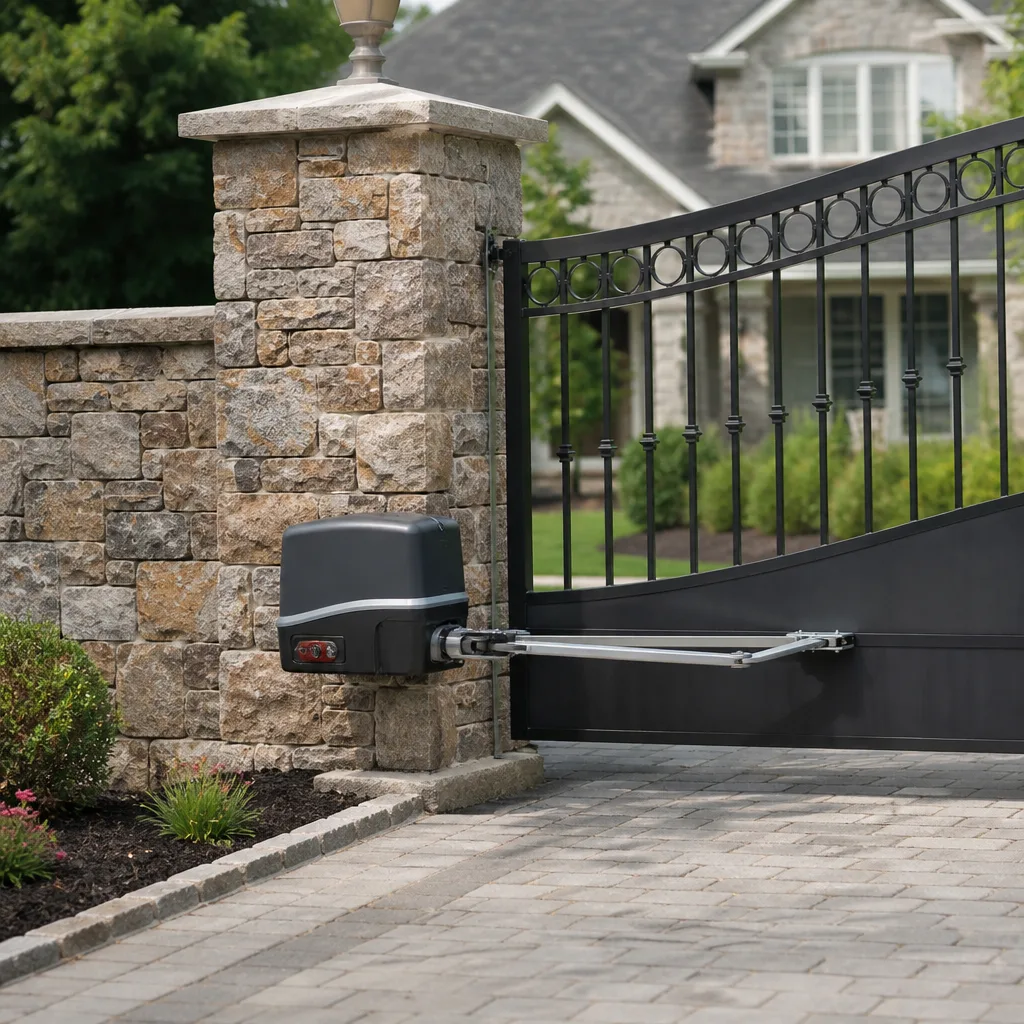 LiftMaster operators
Free on-site gate assessment - hinges, posts, and your LiftMaster or Nice gate operator checked before anything is quoted
The assessment is free and the quote is the invoice.
Get your free estimateThe Complete Guide to Gate Repair in Surprise
Surprise averages around 299 days of sun a year, and that UV load and heat cycling wear gate hardware at nearly twice the rate of national averages. Yet almost every gate repair guide you’ll find is written for a temperate climate, where rust comes from rain and cold, not from a sun that cooks metal and a soil that eats posts from below. In Surprise, the failure points are different, the timeline is different, and the repairs that work here are different. This guide maps the whole landscape for you: mechanical failures versus electric ones, the brands most common in Maricopa County HOA communities, how caliche and heat drive wear, and how to tell a genuine fix from a patch that just delays replacement.
Quick Answer
Gate repair in Surprise means diagnosing failures driven by extreme heat, intense UV, and caliche soil rather than cold and moisture: sun-degraded hinges, heat-stressed operator motors, corroded posts, and control boards that fail faster than in milder climates. Most issues fall into either mechanical problems (sagging, dragging, misaligned latches) or electromechanical ones (motors, sensors, wiring, control boards), and telling the two apart is the first step to a fix that lasts. A gate specialist can usually identify which category you’re dealing with on a first visit and quote the repair before any work begins.
Styles & brands we work with
- Wrought iron
- Wood & steel frame
- Farm & ranch
- Sliding driveway gates
- LiftMaster operators
Table of Contents
- Why Gates Fail Differently in Surprise
- Mechanical vs. Electromechanical Failures
- Brand-Specific Repair Considerations
- Repair or Replace: Reading the Signs
- When Your Electric Gate Acts Up
- Documenting Gate Condition for Faster Diagnosis
- Seasonal Care That Actually Matters Here
- How Gate Repair Costs Work
Why Gates Fail Differently in Surprise
A gate in Surprise lives a harder life than the same gate in a mild climate. The sun is relentless, the summer heat loads every metal part, and the ground beneath the posts is caliche, a dense, cement-like soil layer common across the West Valley. Each of those conditions changes what fails and when.
Ultraviolet light breaks down the protective coatings on hinges, latches, and fasteners. Once a coating fails, the exposed metal pits and seizes. Combine that with the daily swing between hot afternoons and cooler desert nights, and metal parts expand and contract constantly. That heat cycling loosens fasteners, stresses welds, and wears pivot points faster than a steady climate ever would. In our experience, gate hardware here tends to show the wear you’d expect from several more years of service than it has actually seen.
Caliche matters just as much. Posts set into this soil are surrounded by a material that holds moisture unevenly and shifts as it dries. That movement can tilt a post, open a gap at the hinge, and throw a gate out of alignment. It also makes corrosion worse where the post meets the ground, because water sits against the base instead of draining away. If your gate drags, sticks, or no longer latches cleanly, a moving post is one of the first things a technician should check.
Surprise’s development pattern adds another layer. Many communities here were built within a relatively short window, so gates across a neighborhood can reach the end of their service life at roughly the same time. That doesn’t change how a single repair is done, but it explains why operators and hinges in some Surprise communities seem to fail in clusters.
Mechanical vs. Electromechanical Failures
The most expensive mistake in gate repair is misdiagnosing the category. A mechanical problem is anything in the structure and movement of the gate itself: hinges, wheels, tracks, latches, posts, frames, and alignment. An electromechanical problem lives in the automation: the motor, the control board, the sensors, the wiring, and the power supply. The two interact constantly, which is exactly why they get confused.
A gate that stops mid-swing might look like an electrical failure when the real cause is a hinge that has stiffened in the heat and overloaded the motor, tripping its safety circuit. Replace the motor and the new one will do the same thing. Conversely, a gate that drags might look mechanical when a failing operator is the actual culprit. Here’s how a proper diagnosis usually runs:
- Observe the gate by hand. With the operator disengaged, the gate should swing or slide freely. Any binding points to a mechanical cause.
- Check the structure. Posts, hinges, wheels, and tracks get inspected for movement, wear, and alignment.
- Test the electrical side. Motors, control boards, sensors, and wiring are checked for power, signal, and fault codes.
- Compare findings. If both sides show problems, the mechanical issue is usually addressed first so the electrical repair isn’t masking it.
- Quote before work. You get a clear explanation of what’s failing and a written price before anything is repaired.
In Surprise, the heat tilts this diagnosis in a predictable direction. Stiff hinges and heat-stressed motors both show up more often, and a technician who only works on gates learns to read the difference quickly. That single-trade focus is why we diagnose the actual problem instead of defaulting to the most familiar brand’s answer.
Brand-Specific Repair Considerations
Gate operators aren’t interchangeable, and neither are their failure patterns. The systems most common across Maricopa County residential and HOA communities each have their own quirks, and knowing them shortens diagnosis and reduces parts delays. We work on whatever gate you have, and our technicians carry working knowledge of nine major brands, including BFT, Linear, Viking, and Ghost Controls.
- BFT operators are common on heavier driveway gates. Their control boards and limit settings reward careful adjustment, especially after the heat has shifted a gate’s travel.
- Linear systems show up widely in residential communities. Sensor alignment and board faults are frequent culprits when a Linear gate stops responding.
- Viking operators are known for solid mechanical drive components, but their boards and safety edges still need proper diagnosis when a gate reverses or won’t close.
- Ghost Controls units are popular on residential driveways, and their sensor and remote pairing issues are common enough that familiarity saves real time.
The reason brand knowledge matters here isn’t brand loyalty, it’s speed and accuracy. A generalist who sees one brand regularly will default to that brand’s solution even when your gate runs something else. A specialist reads the actual fault. If your gate is a make we haven’t named, that’s fine, because diagnosis starts with the gate, not the label.
Surprise’s HOA communities often standardize on one operator brand across many homes. That’s useful for a technician, who can bring the right knowledge and parts expectations on the first visit, and it’s useful for you, because a repair on a common system is usually faster than on a one-off install.
Repair or Replace: Reading the Signs
Not every failing gate needs replacing, but not every repair is a real fix either. The distinction comes down to whether the underlying cause is corrected or just hidden. A repair is genuine when the failed component is replaced or adjusted and the gate returns to smooth, reliable operation. A patch is when the symptom is silenced while the cause continues.
Signs a repair is the right call:
- A single component has failed and the rest of the gate is sound.
- The gate still moves freely by hand once the failed part is disengaged.
- Posts are solid and the frame shows no structural movement.
- The operator’s motor and control board are healthy apart from the specific fault.
Signs a replacement is closer than a repair:
- Multiple components are failing at once, suggesting the whole system is at end of life.
- Repeated repairs on the same part within a short window, which usually means the cause was never found.
- Posts that have shifted or corroded to the point where alignment can’t hold.
- A control board or motor that is obsolete and no longer supported by the manufacturer.
In Surprise, sun and heat push more systems toward the replacement line than you might expect. UV damage compounds: once hinges, coatings, and operator housings all begin to fail together, repair costs can climb toward the price of a new gate and operator. A good technician will tell you honestly which side of that line you’re on, and quote accordingly.
When Your Electric Gate Acts Up
Electric gate acting up? The automated side of the system has its own failure map, and it’s where a specialist matters most. Wiring, control boards, sensors, and motors are core to what we do, not something we hand off. In the Surprise heat, the most common automated failures follow a few clear patterns.
- Gate reverses or stops mid-travel. Safety sensors are misaligned, obstructed, or heat-damaged. Sensor diagnosis comes first.
- Gate won’t respond to remotes or keypad. Often a control board or receiver fault, sometimes a power or wiring issue.
- Motor runs but gate doesn’t move. Usually a mechanical binding or a failed drive component, not the motor itself.
- Operator trips repeatedly in hot weather. Overheating protection or a motor under load from stiff, heat-affected hinges.
- Intermittent operation. Loose wiring or a failing board that works when cool and fails when hot.
Each of these needs a different repair, and guessing wrong wastes money. A sensor issue treated as a motor issue leads to a motor replacement that fixes nothing. An overheating operator treated as a board fault leads to a board swap that doesn’t address the load causing the heat.
Electrical work on gate operators involves line voltage and moving machinery, so it’s not a place for guesswork. We recommend a trained professional handle anything inside the operator housing or the wiring. For a resident in Surprise, that means a specialist who can safely diagnose and repair the electrical side and the mechanical side in one visit.
Documenting Gate Condition for Faster Diagnosis
You can shorten a technician’s diagnosis time, and often the cost of the visit, by keeping a simple record of your gate’s behavior. Most homeowners call with a vague symptom, and the technician spends part of the visit pinning down when, how, and under what conditions the failure occurs. Good notes cut that down.
What to record:
- When the problem happens. Time of day, outside temperature, and whether the gate has just been used.
- What the gate does. Stops, reverses, drags, sticks, won’t latch, makes noise, or shows a light pattern on the operator.
- Any warnings on the operator. Error codes or indicator lights are gold for a technician.
- Recent changes. New paint, landscaping, a bumped post, a power outage, or a hard wind event.
- Photos over time. A shot of the gate and hinges every few months shows wear trends a single visit can’t reveal.
This is especially useful in Surprise, where heat-related failures are often intermittent. A gate that works in the morning and fails at 4pm tells a technician something a gate that just “doesn’t work” cannot. For property managers overseeing multiple gates, a shared log per gate makes scheduling and budgeting far more predictable.
A simple notebook or phone note is enough. The point isn’t a formal inspection report, it’s a clear symptom history. When you call, you can describe the pattern in a sentence, and the diagnosis starts from a much better place.
Seasonal Care That Actually Matters Here
Most yearly gate maintenance advice is written for places with hard winters. In Surprise, the seasonal pressure is different. Summer is the punishing season, and the care that matters is the care that helps the gate survive the heat.
- Lubricate hinges and pivot points before summer. Heat-stiffened hinges overload motors and wear faster without lubrication.
- Check post bases each spring. Caliche movement shows up at the base first; catching a shift early prevents alignment problems.
- Inspect coatings and touch up bare metal. Once UV breaks a coating, corrosion accelerates in the exposed metal.
- Clear sensors and check alignment. Dust and debris plus heat stress cause false obstructions and reversals.
- Listen for changes in motor sound. A motor working harder is an early warning of mechanical binding.
We don’t sell maintenance plans. If you want a technician to inspect and service your gate, it’s a one-time visit priced per job after we look at the gate. For many Surprise homeowners and HOA boards, that yearly inspection is enough to catch small problems before they become expensive ones. Between visits, the list above is the maintenance that actually pays off in this climate.
How Gate Repair Costs Work
Gate repair pricing is set per job by a written estimate, not by a fixed menu, because the cost depends on what’s actually failing. A sensor misalignment and a control board replacement are very different jobs, and a technician can’t quote accurately without diagnosing first. What you can count on is that the price is quoted and agreed before any work starts, so there’s no surprise invoice at the end.
When you call, here’s what to expect:
- Describe the symptom. What the gate does, when it happens, and any error codes or warning lights.
- Get a visit scheduled. Fast dispatch from 7am to 7pm, Sunday through Friday.
- Diagnosis on site. The technician identifies whether it’s mechanical, electromechanical, or both.
- Written estimate. You get the scope of the repair and the price before any work begins.
- Repair and test. The fix is completed and the gate is tested for smooth, reliable operation.
Estimates are free, and there is no separate diagnostic or service-call fee. If a repair isn’t the right answer and replacement makes more sense, you’ll hear that too, with an installation quote alongside it. One call covers both, so you don’t need a second company for the decision.
Common Mistakes to Avoid
- Assuming the motor is the problem. In hot climates like Surprise’s, stiff hinges often mimic motor failure. Replacing a motor when the real issue is mechanical wastes money and the new motor fails the same way.
- Using a generalist for an automated gate. A handyman without specialist gate knowledge may not diagnose control boards, sensors, or brand-specific operators correctly. Gate work is its own trade.
- Ignoring a post that has shifted. Caliche movement is common here, and a misaligned post throws the gate, hinges, and operator out of alignment. Fix the base first.
- Silencing the symptom instead of the cause. A gate that works after a quick adjustment may be failing for a deeper reason, and the same problem returns. A real repair corrects the cause.
- Skipping pre-summer lubrication. Heat-stiffened hinges accelerate wear on every moving part. A little lubrication before the hot season prevents a lot of repair work.
- Waiting until the gate fully fails. Early symptoms like dragging, noisy operation, or an occasional reversal are cheaper to fix than a complete failure. Documenting symptoms makes early diagnosis easier.
- Letting sensory or safety issues linger. A gate that reverses unpredictably or fails to sense obstructions is a hazard, especially on automated driveways and HOA entrances. Have it checked by a professional.
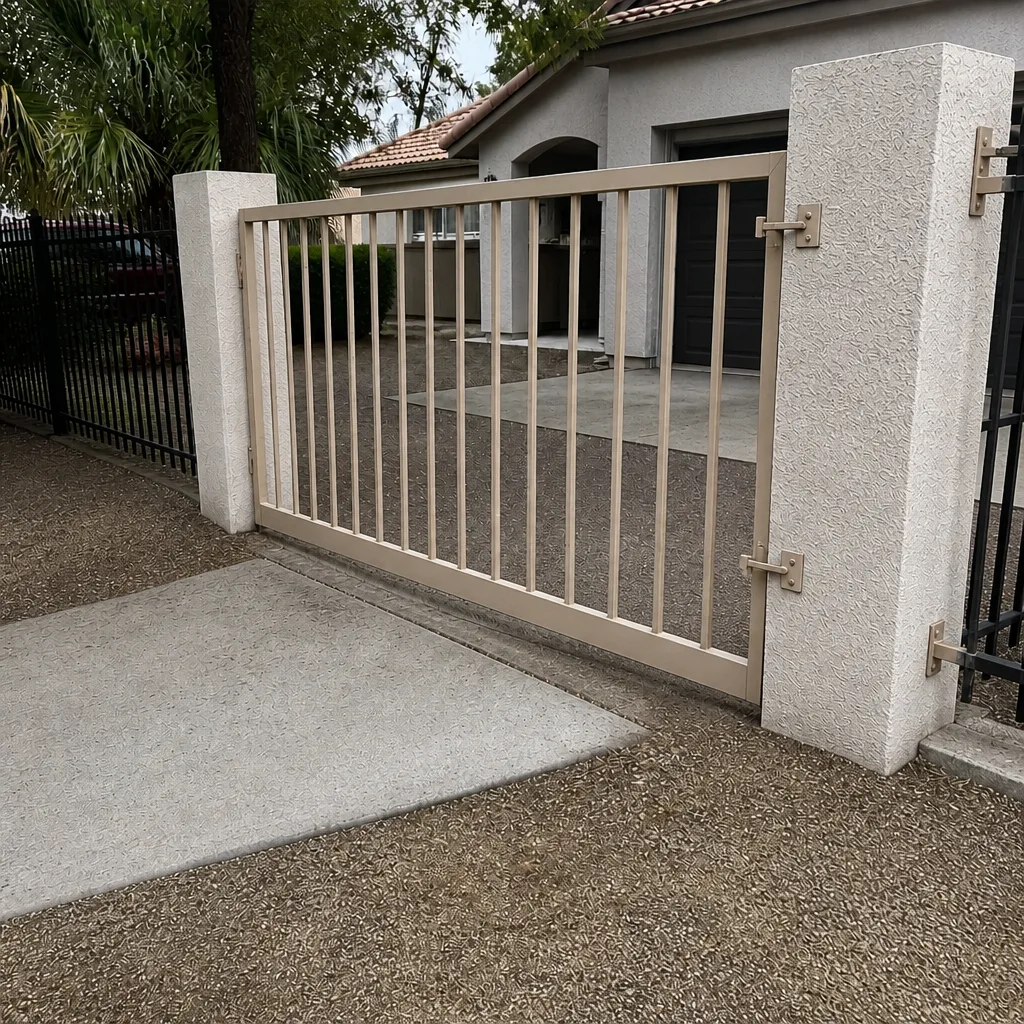
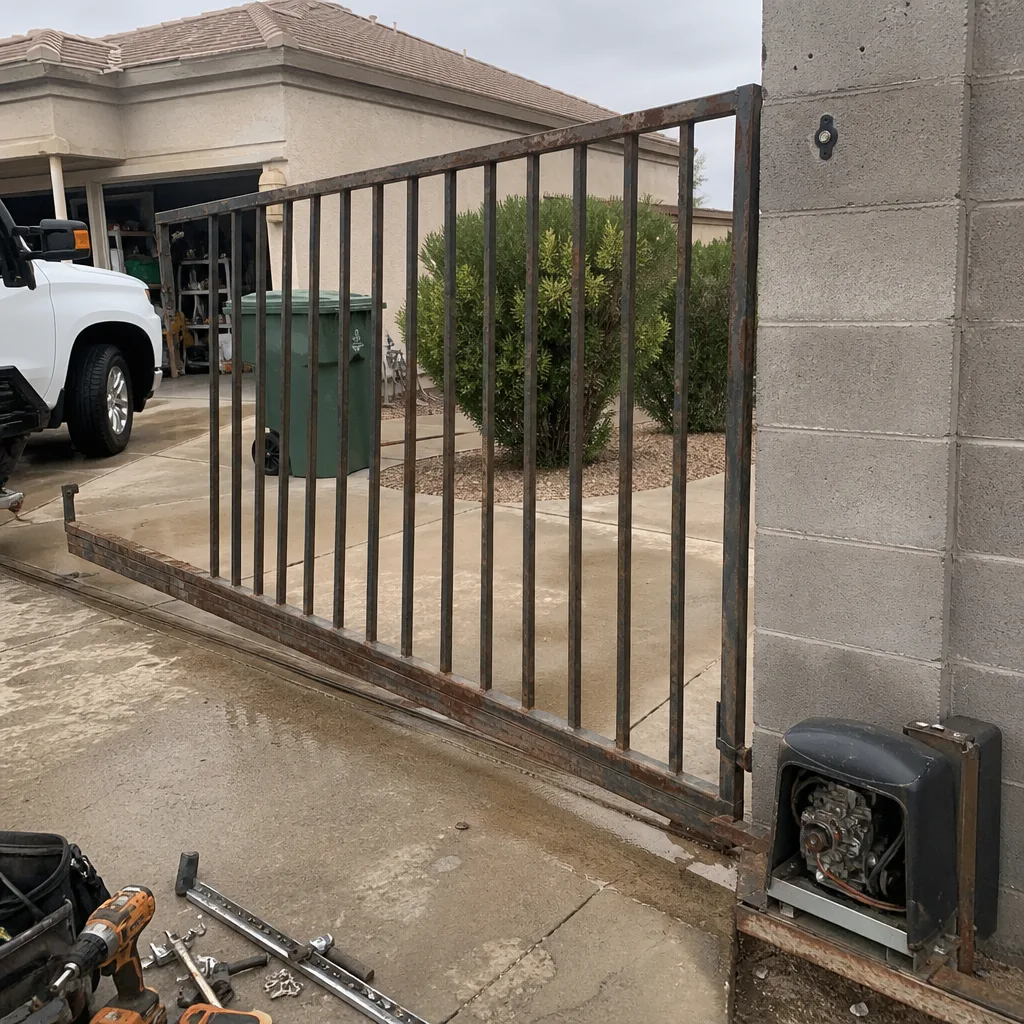
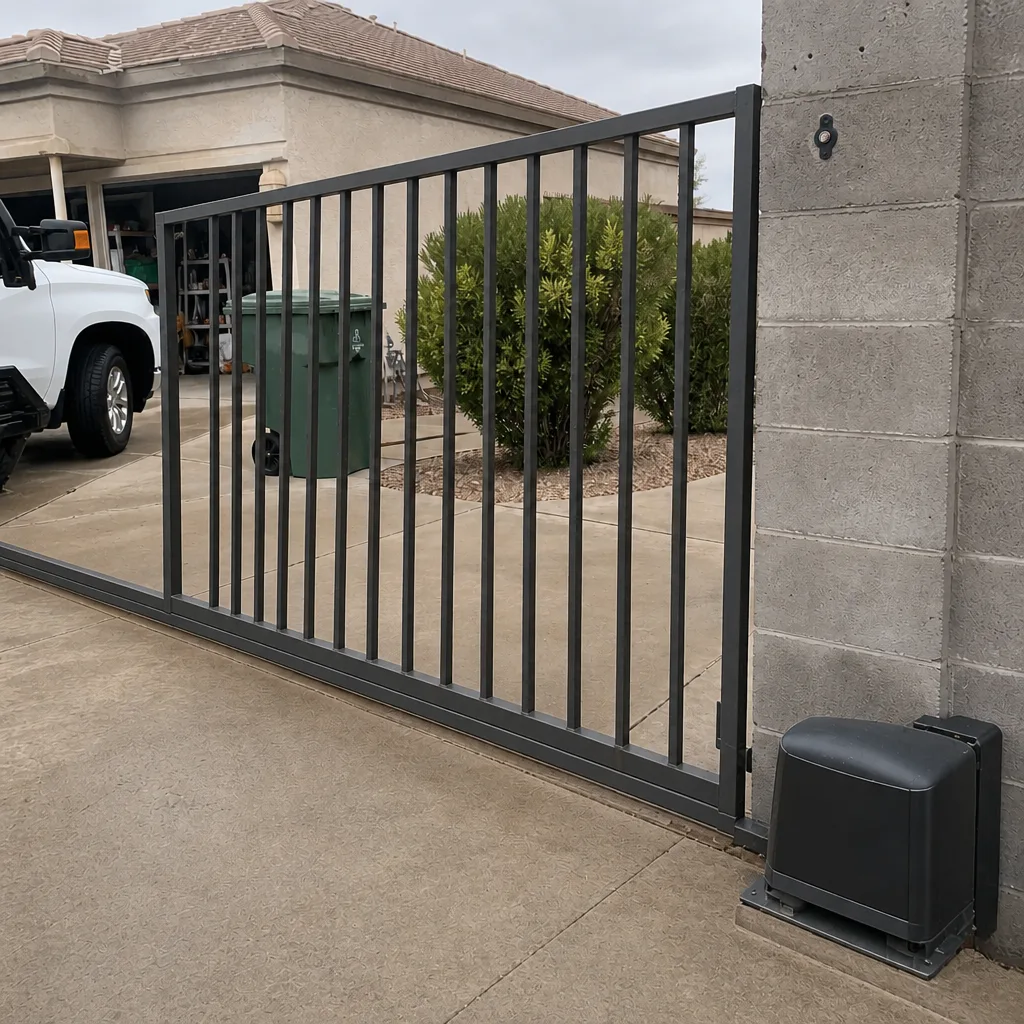
See the difference
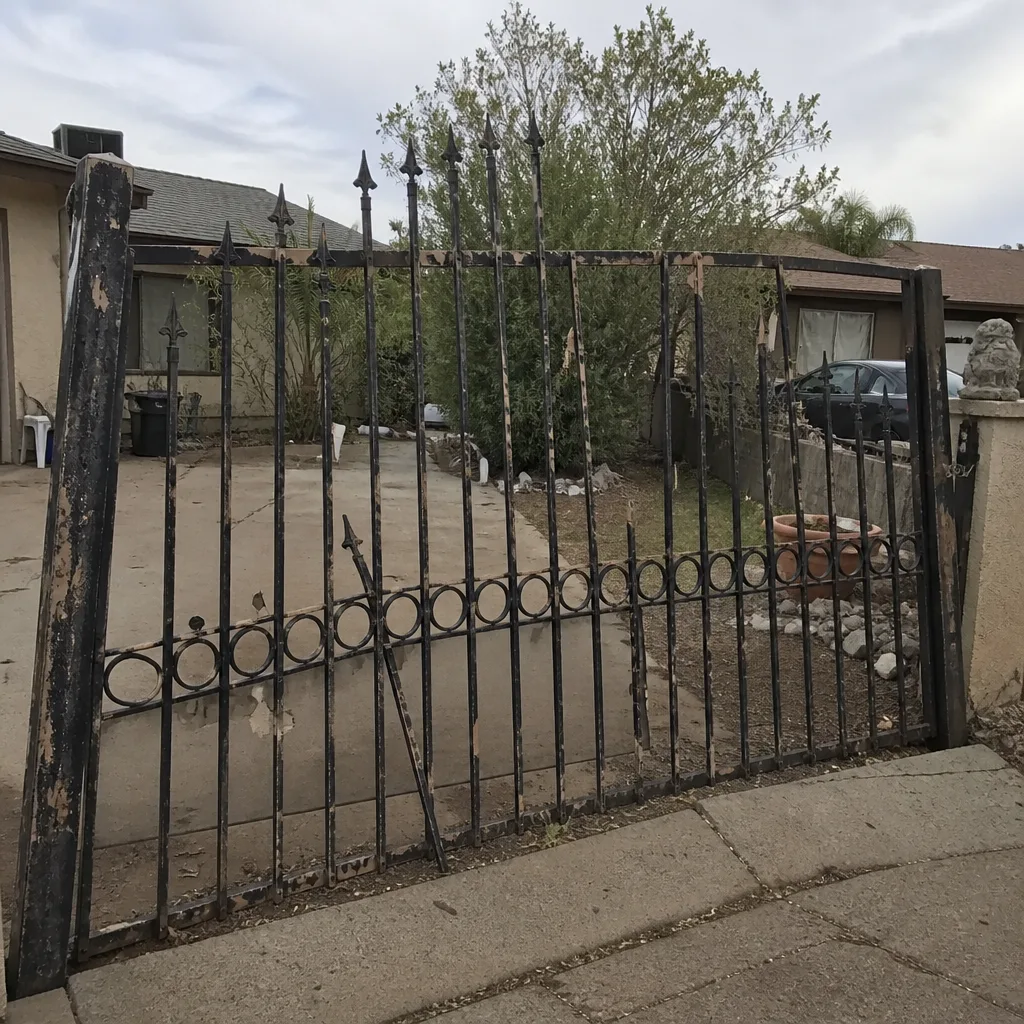 Before
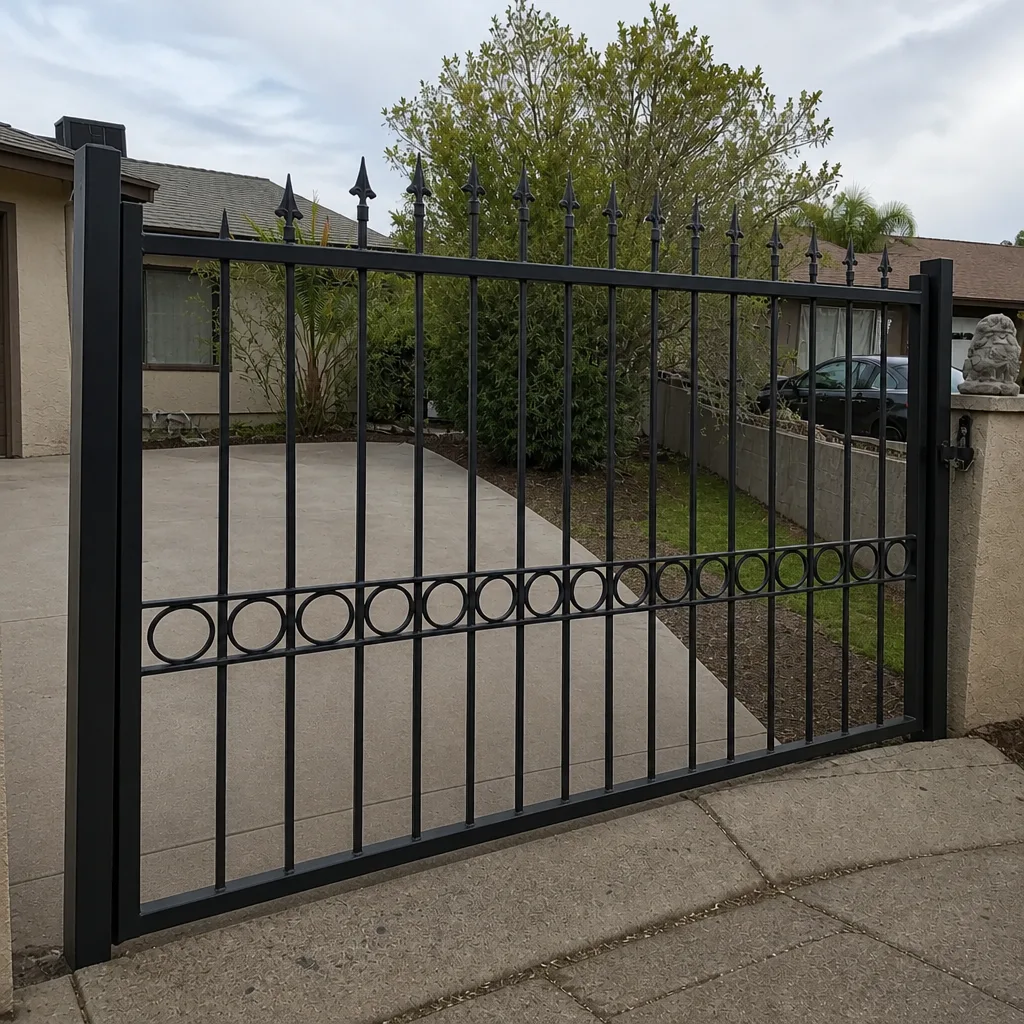 After
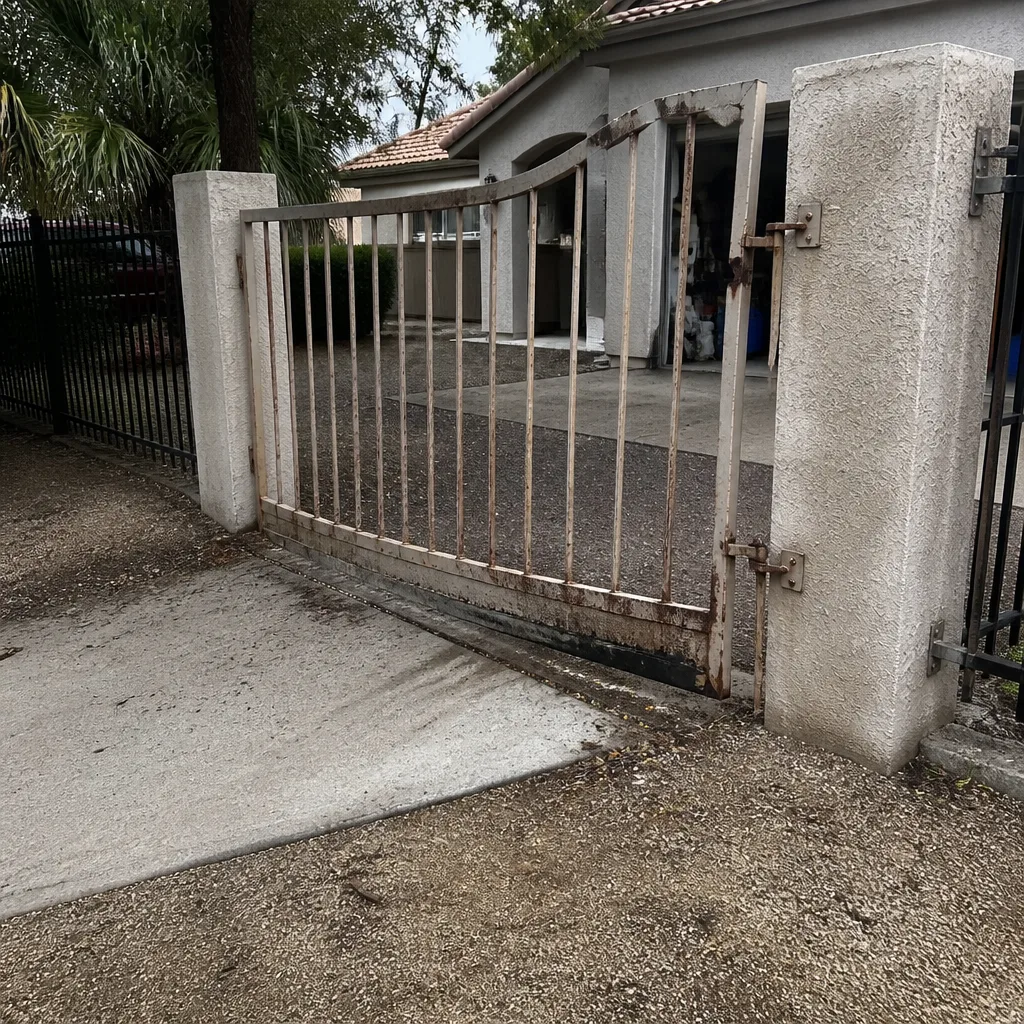 Before
 After
 Before
 After
When to Call a Professional
Some gate problems are worth a call right away. If your gate is stuck open or closed, if an automated gate reverses unpredictably or fails to sense obstructions, if you smell burning from the operator, or if a post has moved and the gate no longer latches, it’s time for a specialist. Electrical work inside an operator involves line voltage and moving parts, so it’s not a place for DIY fixes. The same goes for a heavy gate that has come off its track or a panel that swings freely and could crush someone.
For less urgent issues, the threshold is whether the problem is recurring. A single stuck latch might be a quick fix. The same latch failing every few weeks usually points to a cause that needs a proper diagnosis. Gate Repair Surprise offers free estimates in Surprise: call (877) 657-0401. We answer 24/7. Fast dispatch from 7am to 7pm, Sunday through Friday.
Frequently Asked Questions
Gate repair is priced per job by a written estimate, because the cost depends on what’s actually failing, from a sensor adjustment to a control board replacement. There’s no separate diagnostic fee, and the estimate is free. The price is quoted and agreed before any work starts. Call (877) 657-0401 for an exact quote. Estimates are free.
Same-day service is available for repair calls, with fast dispatch from 7am to 7pm, Sunday through Friday. We answer 24/7, and a call outside dispatch hours is booked into the next opening, Sunday through Friday, 7am to 7pm. Call (877) 657-0401 to check today’s availability. Estimates are free.
A gate that reverses is usually responding to a safety sensor that is misaligned, obstructed, or heat-damaged, though a control board fault can cause the same symptom. In Surprise’s heat, sensor failures are common, so diagnosis starts there. Don’t ignore it, since a reversing gate can be a hazard. Call (877) 657-0401 to schedule a diagnosis. Estimates are free.
Yes. Wiring, control boards, sensors, motors, and safety edges on automated gate systems are core to what we do, not referred out. Electrical work inside an operator involves line voltage, so it’s work for a trained professional. Call (877) 657-0401 to discuss your system. Estimates are free.
We work on whatever gate you have, and our technicians carry working knowledge of nine major brands, including BFT, Linear, Viking, and Ghost Controls. Brand knowledge matters because each operator has its own failure patterns and parts. Call (877) 657-0401 with your brand and symptom. Estimates are free.
Repair is usually the right call when a single component has failed and the rest of the gate is sound. Replacement makes more sense when multiple parts are failing together, repairs on the same part keep recurring, or the operator is obsolete and unsupported. A technician can tell you which side of that line your gate is on. Call (877) 657-0401 for an assessment. Estimates are free.
The Bottom Line
Gates in Surprise fail on a different timeline than the guides written for temperate climates suggest. Sun and heat cycling wear hinges and operators faster, and caliche soil moves posts in ways that throw alignment off. The repair that lasts starts with the right diagnosis: mechanical first, electromechanical second, and a signed estimate before work begins. Keep a simple symptom log, lubricate before summer, and watch post bases each spring. When a repair is needed, a specialist who works only on gates can read the actual fault instead of defaulting to a familiar brand’s answer. For gate repair that covers both power and structure in one visit, or electric gate repair for an operator that’s misbehaving, fair notice.
For a free estimate in Surprise, call Gate Repair Surprise at (877) 657-0401. We answer 24/7. Fast dispatch from 7am to 7pm, Sunday through Friday. One call covers repair and installation, and the price is agreed before any work starts.
Written by the team at Gate Repair Surprise.