
Last updated November 15, 2026
 Wrought iron
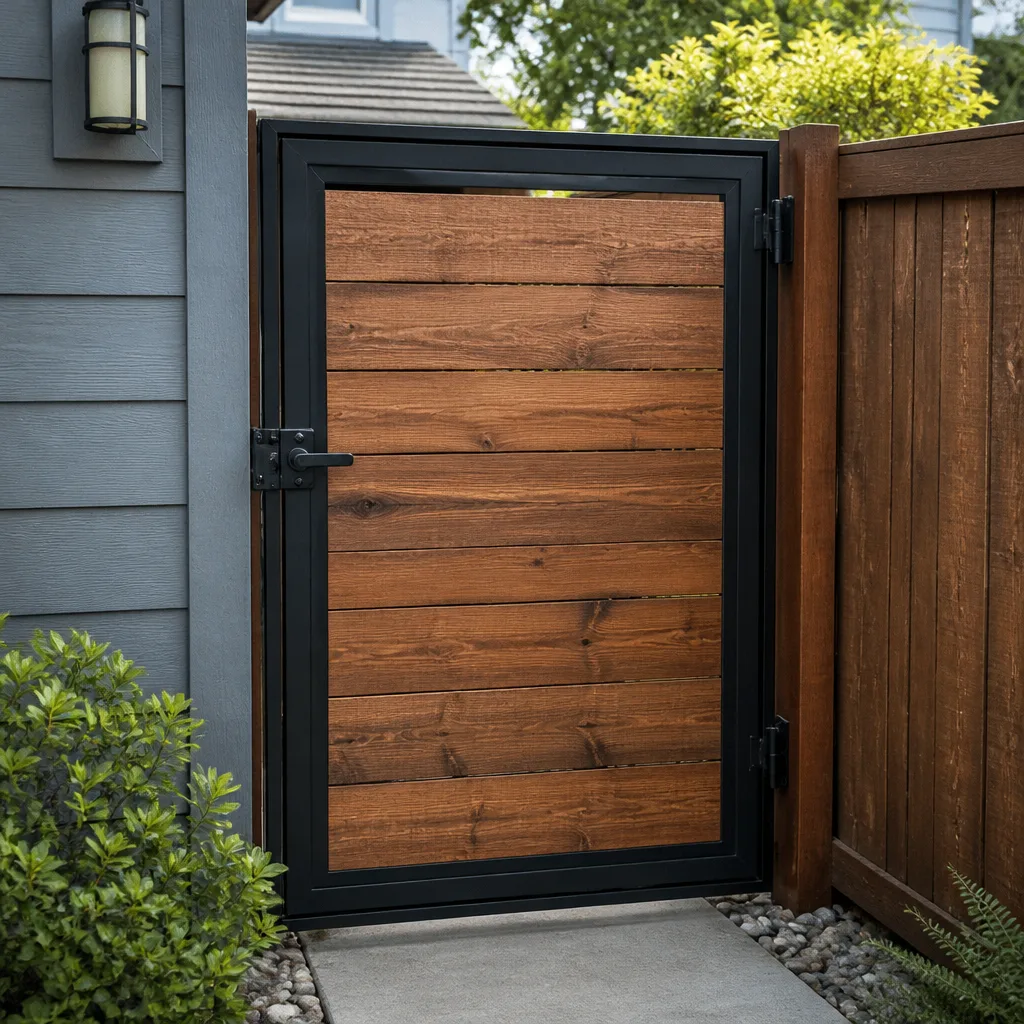 Wood & steel frame
 Farm & ranch
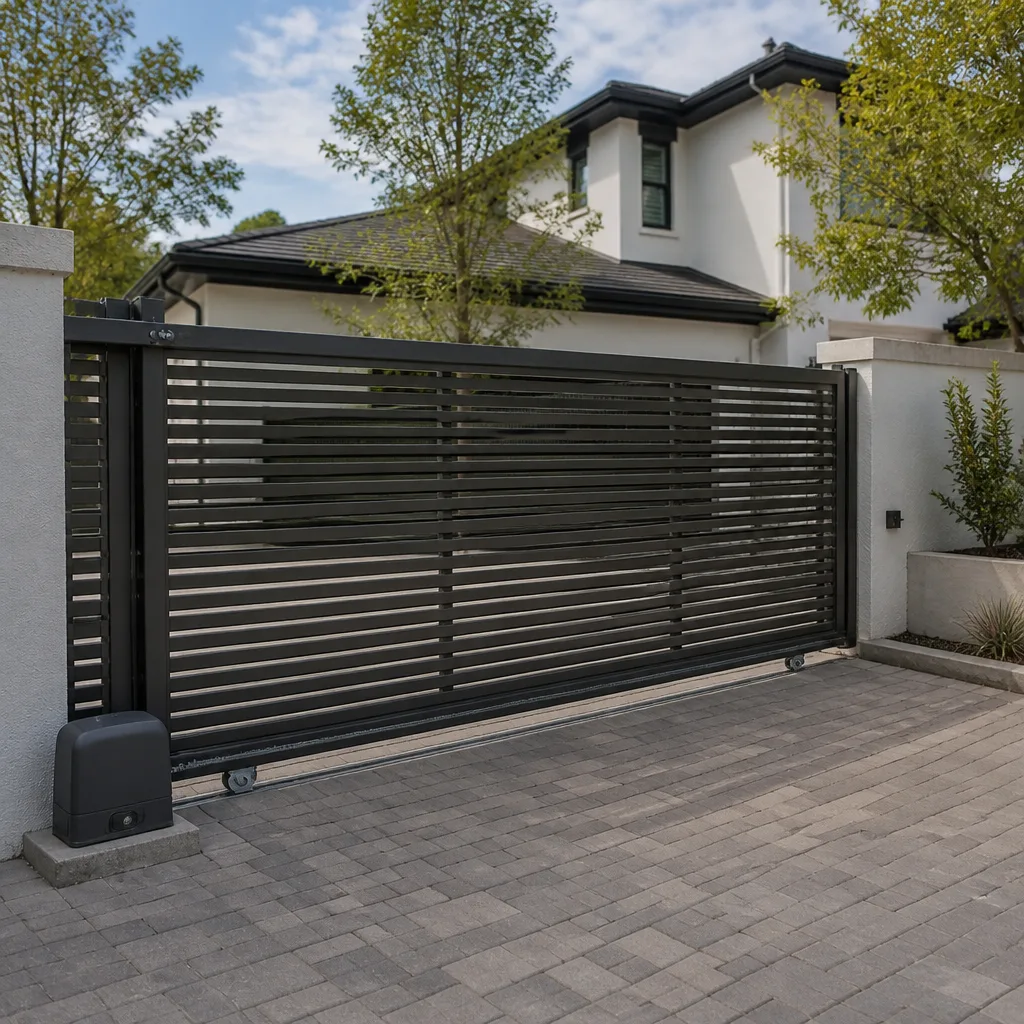 Sliding driveway gates
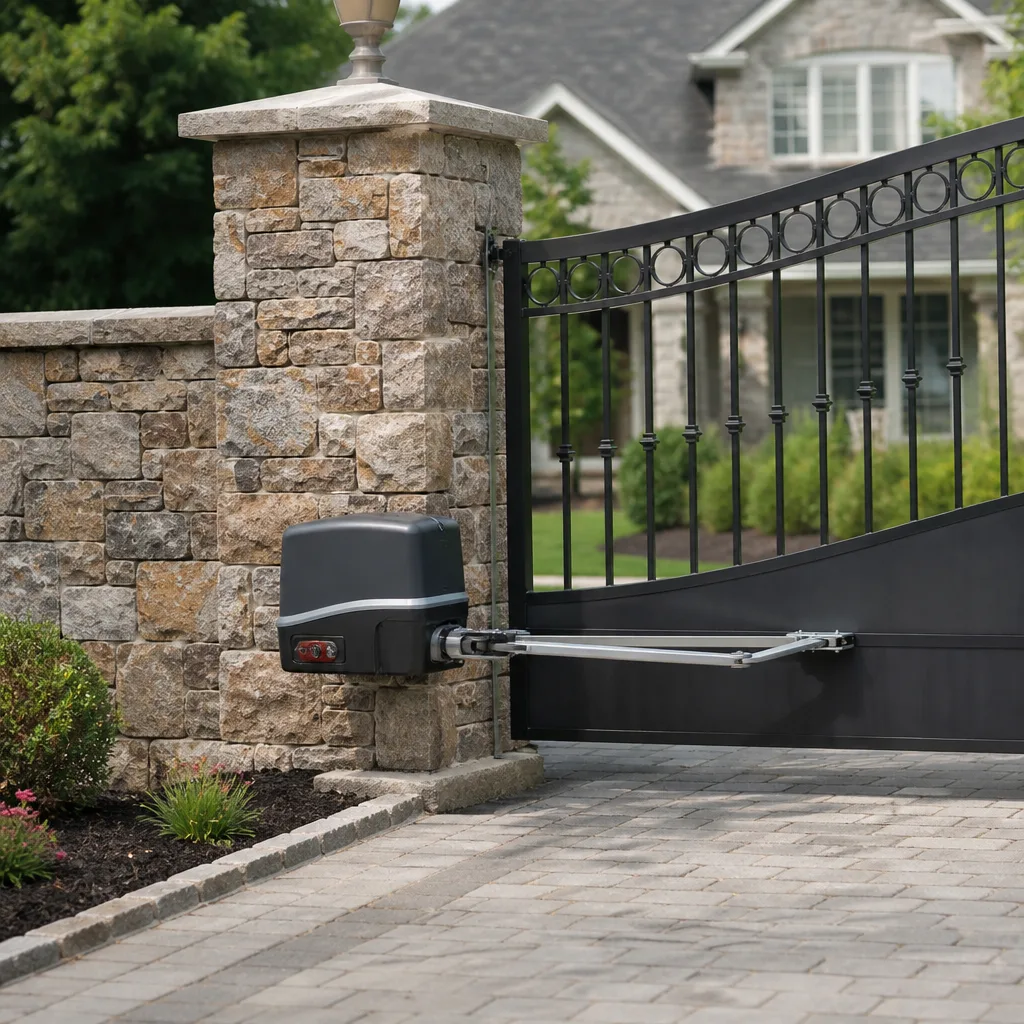 LiftMaster operators
Free on-site gate assessment - hinges, posts, and your LiftMaster or Nice gate operator checked before anything is quoted
The assessment is free and the quote is the invoice.
Get your free estimateGate Repair Maintenance Checklist for Surprise Homeowners
Most gate failures give you a warning first. The motor hesitates. The swing stutters halfway. A hinge starts groaning on hot afternoons. That warning is usually quiet, and it usually shows up weeks before the gate actually stops. The problem with most maintenance checklists is timing: they treat every month the same, so the tasks land before the damage starts or after it’s already done. In Surprise, the calendar matters more than the list. Dust storm season, monsoon season, and the long stretch of triple-digit heat each stress a gate in different ways. This guide walks through what to inspect, when to inspect it, and what to note down after each pass.
Quick Answer
A gate maintenance checklist for a Surprise home should be scheduled around the local calendar, not a generic monthly reminder: deep inspection and lubrication before monsoon season, a separate post-monsoon pass focused on dust in the control box and debris in the track, and lighter monthly checks through the hottest months. Automated gates need the electrical side checked after any major dust storm, and safety reversal sensors should be tested monthly. Log every inspection so a technician can spot patterns instead of guessing at single failures.
Styles & brands we work with
- Wrought iron
- Wood & steel frame
- Farm & ranch
- Sliding driveway gates
- LiftMaster operators
Table of Contents
- Why Timing Beats the Standard Checklist
- Pre-Monsoon Inspection: What to Do Before the Storms
- Post-Monsoon Inspection: What Everyone Misses
- Lubrication Schedules for a High-Heat Climate
- Electrical Checks After a Dust Storm
- How to Test Safety Reversal and Obstruction Sensors
- What to Log After Every Inspection
- Common Mistakes to Avoid
- When to Call a Professional
Why Timing Beats the Standard Checklist
A generic gate checklist reads something like this: lubricate monthly, check hardware quarterly, inspect the motor annually. It isn’t wrong, exactly. It’s just built for an average climate that doesn’t exist in Surprise. When the local conditions change what breaks and when it breaks, a fixed monthly interval stops being useful.
Two forces drive gate wear in Surprise. The first is heat. Long stretches of high temperatures thin lubricants faster than manufacturers’ general timelines assume, and metal parts expand and contract through wide daily swings. The second is wind-blown dust. Fine desert dust settles into tracks, hinge points, and the inside of control boxes, and when the summer storms arrive, that dust turns into grit that grinds sliding components and can bridge electrical contacts.
What that means for a Surprise homeowner:
- Monthly is too slow in dust season. After a major dust storm, a visual check and a control-box inspection matter more than waiting for the monthly slot.
- Annual is too long for lubrication. In sustained heat, grease and lubricant dry out or run off well before a year is up.
- Post-storm inspection is a separate task. The checklist most people follow has no entry for “after the wind event,” which is exactly when gate problems begin.
Getting the sequence right is the difference between a gate that lasts and one that needs a repair call every season. The checklist below is built around this calendar. For broader repair topics, the gate repair page covers what to expect when something does go wrong. For automated systems specifically, see electric gate repair.
Pre-Monsoon Inspection: What to Do Before the Storms
The pre-monsoon pass is the most important one of the year. Do it in the weeks before storm season starts, while conditions are dry and predictable, so any repair you need is handled calmly rather than mid-season. The goal is to get the gate into the best possible shape before wind and rain stress it.
Work through this in order. Each step builds on the one before:
- Clear the track completely. On a sliding gate, sweep the full run of the track. It isn’t enough to look at the worn center section; grab a brush and run it end to end. Dust that has compacted at the far ends will be pushed into the mechanism by the first storm.
- Test the manual release. Every automated gate should have a manual release so you can open it by hand during a power outage. Confirm it works now, not during a storm. A release that’s seized from disuse is a common finding.
- Check hinges, rollers, and the frame. Look for wobble, rust, cracking at weld points, and loosening bolts. Small looseness magnifies under wind load.
- Test the full cycle. Open and close the gate, watching and listening. Note any hesitation, speed change, grinding, or unusual noise. Those observations are your baseline for comparison after the season.
- Trim vegetation back. Trees and shrubs near the swing path will be pushed by wind into the gate. Clear them before the season, not after.
- Look at drainage around the base. A monsoon downpour can pool water where posts and hardware sit, and pooled water around the foundation of a post or the base of a track is a slow-moving problem. Check that water has somewhere to go.
Take notes during this pass. The technician you eventually call will be able to work far more accurately with your baseline observations in hand. This pass alone catches a large share of the problems that surface in Surprise once storms arrive.
Post-Monsoon Inspection: What Everyone Misses
After storm season, most homeowners do nothing. The gate is still working, so it must be fine. That’s the reasoning, and it’s where a lot of small problems get baked into place. Wind and rain push fine dust and grit into moving parts, settle it into tracks, and can work it into electrical enclosures. A gate that survived the season can still be running on borrowed time.
The post-monsoon pass is focused on what the storm moved:
- Re-clear the track and rollers. Grit that settled during storms is abrasive and wears sliding surfaces faster than ordinary dust.
- Inspect the control enclosure exterior. Check the gasket or seal around the control box. A compromised seal means dust and moisture can reach the electronics.
- Look for shifted hardware. Bolts that loosened under wind load, posts with slight lean, and hinges that moved. Compare against your pre-monsoon notes.
- Test safety sensors and stops. Obstruction sensors should stop the gate reliably. Confirm the limit positions are still correct and the gate doesn’t over-travel or stop short.
- Check chain or drive tension on sliding gates. If a chain or drive track shifted, the gate can run rough or slack.
This is also the right moment for a lubrication refresh, reasoning we’ll cover next. The combined pattern – pre-season deep pass, post-season cleanup pass – matches how a gate actually gets stressed in Surprise. The rest of the year gets lighter monthly checks, and you’ll usually find that fewer repairs are needed when the calendar is honored. If the storm did cause real damage, calling out a specialist early is the right move; our team handles the whole system, so a single visit can diagnose both the mechanical and the automated sides.
Lubrication Schedules for a High-Heat Climate
Lubrication is where a standard checklist does the most damage, because both directions of the error are common. Under-lubricate and you get accelerated wear. Over-lubricate and you attract dust, which becomes an abrasive paste that’s worse than dry metal. Surprise makes both errors more likely: heat dries products faster, and airborne dust glues itself to anything wet.
Here’s how to think about intervals in a high-heat climate:
- Hinge points and pivot joints: check every month through the hot stretch. Re-lube when the surface looks dry or the hinge sounds dry during a test cycle. Because heat thins and drives off conventional products quickly, “check monthly, apply as needed” works better than “apply monthly.”
- Sliding tracks and rollers: after clearing the track, apply a small amount and wipe off the excess. A light film is right; a wet coat collects dust. Post-monsoon, do a full wipe-down and refresh.
- Chains on sliding gates: a chain benefits from a lubricant that stays put in heat. Use a small amount and wipe off run-off. Over-lubrication on a chain traps dust and accelerates wear on the chain and sprockets.
- What not to use: WD-40 is a light solvent, not a lasting lubricant; it will loosen and displace crud but doesn’t hold up. Avoid sticky products and thick coatings on exposed surfaces where dust settles.
The critical adjustment is simple: shorten the interval, but don’t increase the amount. More frequent, lighter applications are the right approach. Lighter applications also make it easier to see wear, because you aren’t masking it under a thick coat. On automated systems, keep lubricant away from sensors, motors, and wiring enclosures; those components are checked separately and prefer dry conditions. For a gate that’s already running rough and may need activation of a repair visit, the Gate Repair Surprise homepage is a quick starting point.
Electrical Checks After a Dust Storm
This is the section that matters most for automated gates, because dust finds its way into places you can’t see. After a major dust storm, some parts of the electrical system need inspection inside the enclosure. If you’re comfortable opening the control box on your specific model, this is what to look for. If you aren’t, that inspection is exactly what a specialist visit is for – and it should be done after any significant dust event.
What to look for inside the control box:
- Dust accumulation on the control board. Fine dust coats boards and can bridge terminals. Blow out with dry, low-pressure air – never a wet cloth, and never with power connected.
- Loose terminal screws and connectors. Heat cycling plus vibration loosens terminals over time, and a loose power or motor connection is a common cause of intermittent operation.
- Corrosion or discoloration. Brownish residue, white powdery buildup, or darkened terminals suggest heat or moisture exposure and should be checked by a technician.
- The gasket and enclosure entry points. Look at where conduit enters and the condition of the seal. Gaps let dust and moisture in, so sealing those points is a real fix.
- Battery condition on battery-backed systems. Access control systems and operators with battery backup can lose charge under heat. Check the visible state of the battery and note any error codes.
Before opening anything, power the circuit off and confirm it is off. An automated gate operator runs on line voltage, and a stored charge or a mislabeled breaker is a genuine shock hazard. This is not a task to attempt with live power. If there’s any doubt about the wiring or the model’s internals, leave it to a licensed technician.
After checking, confirm the gate cycles correctly and that the safety sensors still trigger. Intermittent issues that show up only during storms usually trace back to something found in this pass. For operators from brands like LiftMaster, FAAC, Elite, and others, our team works on the full range; we don’t default to one manufacturer’s answer.
How to Test Safety Reversal and Obstruction Sensors
Safety sensors are the one part of the gate you want to fail safe. On a swing gate, the system should reverse or stop when it meets an obstruction. On a slide gate, an obstruction in the path should stop and reverse the gate. You don’t need specialized equipment to check these; you do need to check them regularly, and to understand what a “pass” looks like.
Test in this order:
- Test the obstruction path. Place a firm object in the path – something like a trash can or a piece of lumber. Run the gate into it. The gate should stop and reverse, or stop and hold, depending on the operator. It should never push through.
- Test both directions. Repeat the test for opening and closing. Some operators behave differently on each stroke, and a fault can show on only one.
- Test the reversing edge or photocell. If you have a photocell or edge, block the beam or place light pressure on the edge and confirm the gate stops.
- Confirm the gate reverses and clears. After it reverses, the gate should fully open and then stop cleanly at the limit. Partial reversal points to a sensor or limit setting.
- Repeat once more. Run the test a second time to rule out a one-off. If it fails twice, stop using the gate until a technician looks at it.
Do this test monthly, and after every storm. If the gate doesn’t reverse, stop using it and call for service – a gate that fails to reverse is a genuine crush hazard. A trained technician should inspect the sensors and wiring on the operator itself. For reference, our Surprise page covers the services we provide for local homeowners and property managers.
What to Log After Every Inspection
The single most useful habit in gate maintenance is writing down what you saw. A log turns scattered observations into a pattern, and patterns make diagnosis fast. A technician working from a written history isn’t starting from scratch.
What to record each time:
- Date and weather since the last check. Was there a dust storm or a rain event?
- Cycle behavior: smooth, hesitant, slow, unusual noise. Note on open and close separately.
- What you did: cleared the track, applied lubricant, tightened hardware. Keep it factual, not interpretive.
- Any fault indicators: error lights or codes on the operator, blinking patterns, sounds.
- Reversal test result: pass or fail, and which direction.
- Photos. A photo of the control box, the track, and the hinges each time makes small changes obvious over a season.
After a few months, the log will show you whether a problem is seasonal, structural, or operator-related. When you hand it to a technician, they can zero in on the right part of the system instead of chasing symptoms. Our technicians have up to 13 years of experience, and in that time, we’ve learned that a log of two or three entries often saves more time than any single inspection. It also makes a difference to have a gate-only specialist look at the whole system, since we work on both electric and manual gates and have deep familiarity with brands including Mighty Mule, FAAC, and Elite. If your inspection turns up something that needs a licensed hand, Gate Repair Surprise handles the full cycle from diagnosis through repair and installation.
Common Mistakes to Avoid
- Lubricating on a fixed monthly date regardless of conditions. In Surprise’s heat, that can mean re-lubricating dry metal you should have treated sooner, or coating parts that are already collecting dust. Lubricate based on condition and post-storm checks, not just the calendar.
- Skipping the post-monsoon pass because the gate still works. A gate running after storm season hasn’t passed its inspection; it just hasn’t failed yet. Grit in moving parts is quietly doing damage.
- Using WD-40 as a lasting fix. It helps clean and loosen, but it doesn’t provide durable lubrication, and it can draw dust. Use a proper lubricant for the application.
- Opening the control box with power on. This is a genuine electrical hazard. Power off, confirm it’s off, and if you’re not confident, call a specialist.
- Skipping the safety reversal test. Obstruction sensors fail silently. A monthly test is the only reliable way to catch a failing sensor before it matters.
- Ignoring a small change in sound or speed. A hesitation or new noise is exactly the warning you’ll want to write down. It’s usually cheaper to address early, and this is the phase a gate is easiest to fix.
- Not keeping a log. Without notes, every issue looks new, and repeat patterns go unseen. A simple log changes the quality of the diagnosis.
When to Call a Professional
Some tasks belong on your checklist. Others should go straight to a specialist. Call us if the gate fails its safety reversal test, if there’s any sign of heat damage or corrosion inside the control box, if the gate is running rough, slow, or noisy, or if the operator throws an error code you can’t clear. Call us after any significant storm if the electrical side needs an inspection inside the box. Call us if the gate is off its track or the frame has shifted, and call us if you’re not comfortable running the tests above. On a gate, the dangerous parts are the operator’s wiring and power, the heavy panels that can crush, and slide gates that come off the track – those deserve a trained technician, not a checklist.
Gate Repair Surprise offers free estimates in Surprise. Call (877) 657-0401 and we’ll take a look at the whole system, not just the symptom. We answer 24/7. Fast dispatch from 7am to 7pm, Sunday through Friday.
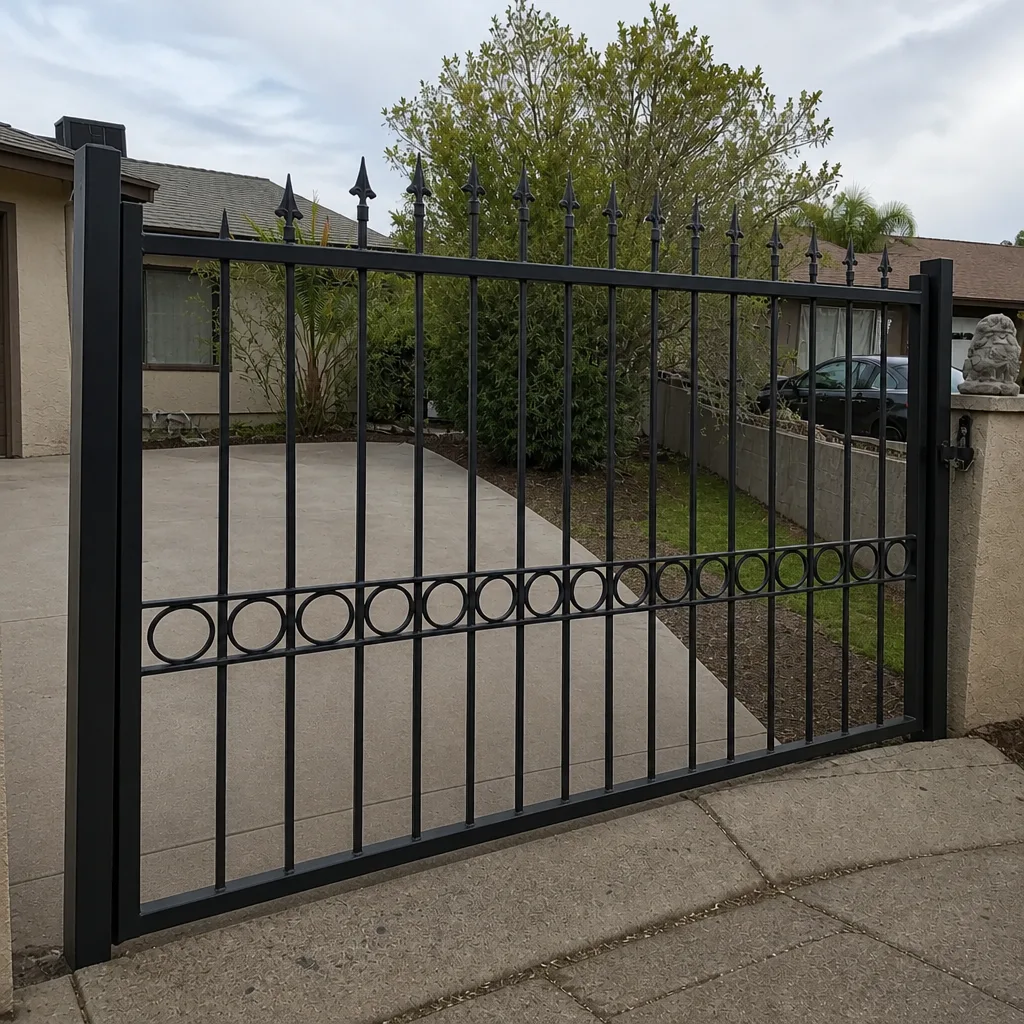
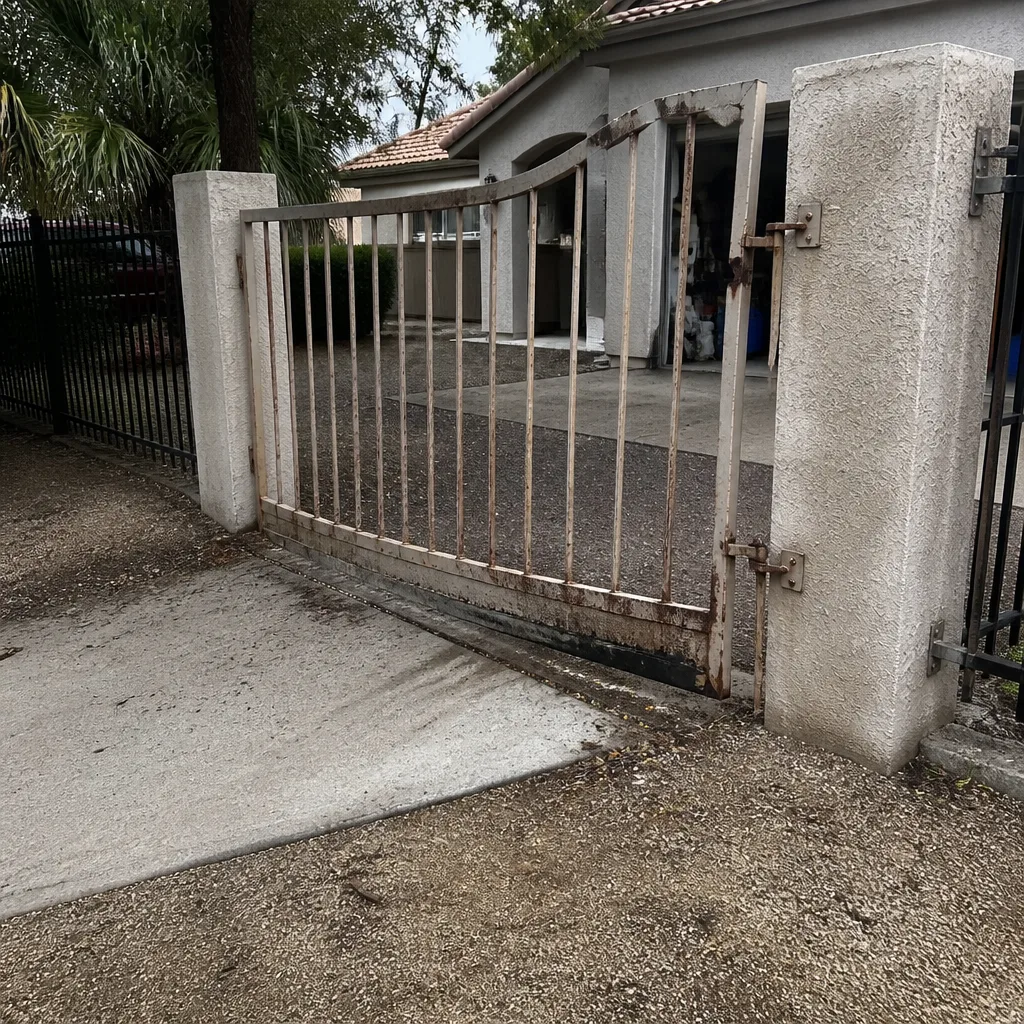
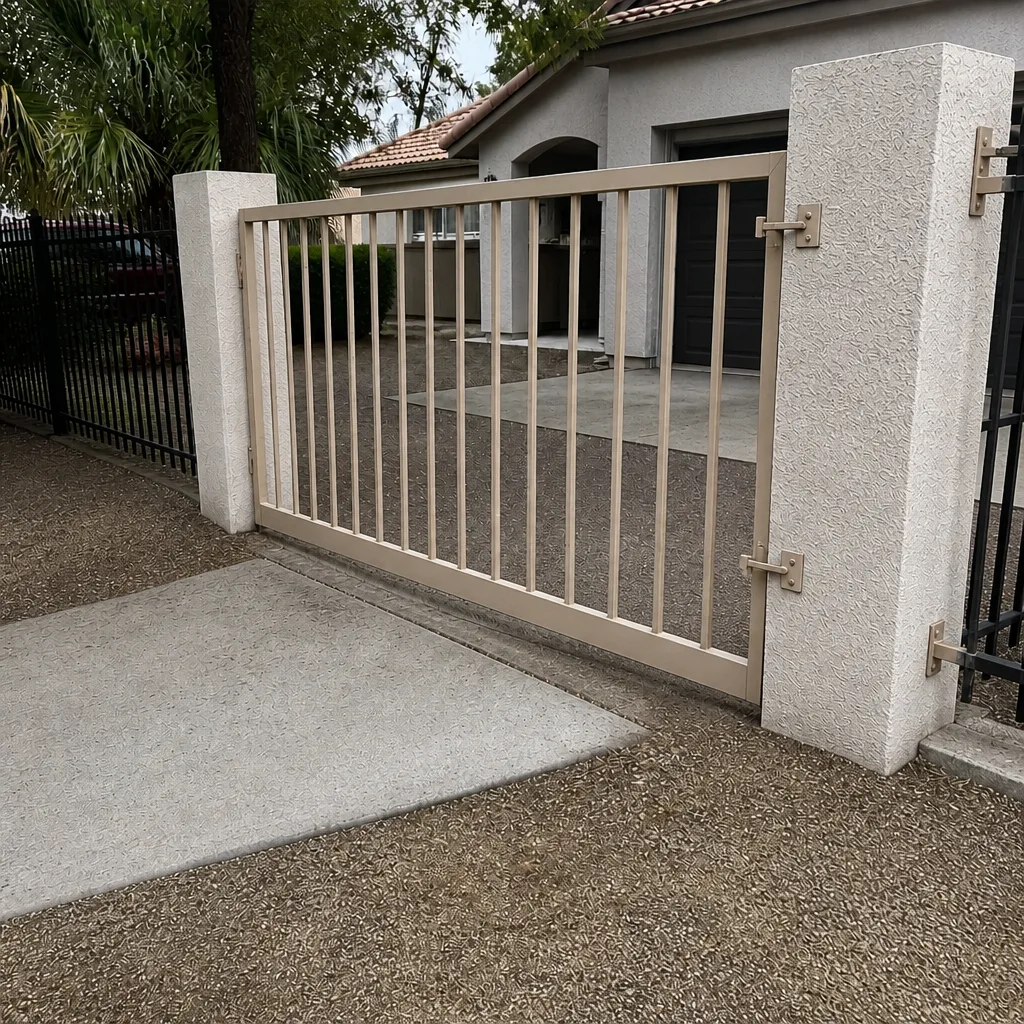
See the difference
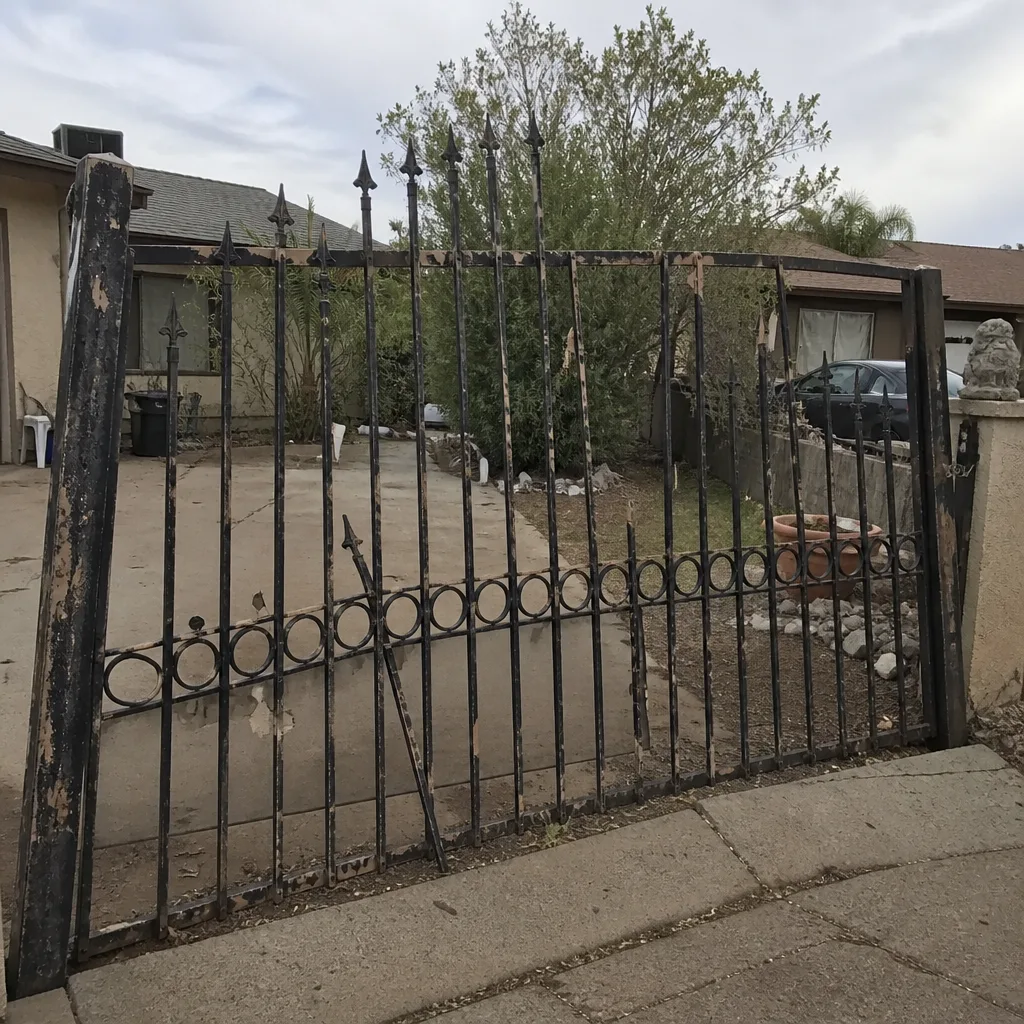 Before
 After
 Before
 After
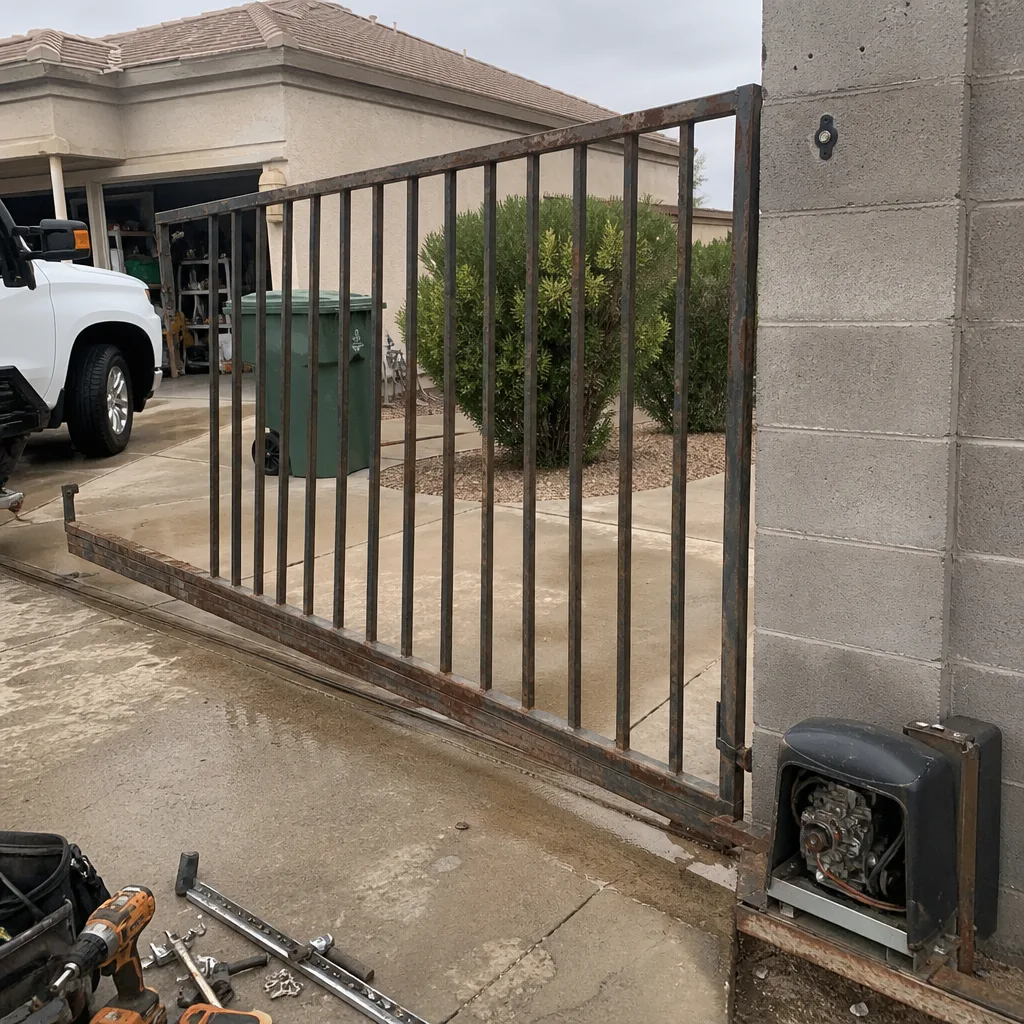 Before
 After
Frequently Asked Questions
Inspect it monthly for the basics – track, hinges, and the safety reversal test – and add two deeper passes each year, one before and one after monsoon season. If a major dust storm or rain event comes through, run an extra check after it clears. The monthly checks are quick; the seasonal passes are the ones that catch the bigger issues.
Yes. In the high-heat months, lubricant dries out or thins faster than general guidelines assume, so check and re-apply as needed rather than assuming a fixed interval. Keep the applications light. A thin film is right; a heavy coat collects dust and worsens wear.
Start with the track, hinges, and rollers – clear any grit – then look at the control enclosure exterior and the gasket around it. If you’re comfortable opening the box, inspect the board and terminals for dust and connections for tightness with the power off. If anything looks off, call a specialist; dust inside the control box is behind a lot of intermittent gate problems.
Yes. Place a firm object in the gate’s path and run the gate into it. The gate should stop and reverse, or stop and hold, in both directions. Repeat the test once. If it fails, stop using the gate and call for service – a gate that doesn’t reverse is a crush hazard.
Moisture or dust has likely gotten into the control box or reached the sensor connections. That’s usually a sealing, sensor, or wiring issue rather than a dead operator, and it’s a common finding in Surprise after storm season. Have a technician inspect the box and connections with the power off before you use the gate.
Record the date, recent weather, cycle behavior on open and close, what you did, any error codes or lights, and the reversal test result. Add a photo of the control box, track, and hinges each time. A short log of a few entries lets a technician spot patterns rather than chasing one-off symptoms.
The Bottom Line
The most useful gate maintenance checklist is a calendar, not a list. In Surprise, you need a pre-monsoon deep pass, a post-monsoon cleanup, and monthly basics in between, with lubrication done by condition rather than a fixed date. The electrical side of an automated gate deserves specific attention after dust storms, and safety reversal sensors should be tested every month. Write down what you find, and the next diagnosis gets faster. Do the routine work, log what you see, and call a specialist when a test fails or the operator acts up.
Call (877) 657-0401 for a free estimate. We answer 24/7. Fast dispatch from 7am to 7pm, Sunday through Friday.
Written by the team at Gate Repair Surprise.