
Last updated November 15, 2026
 Wrought iron
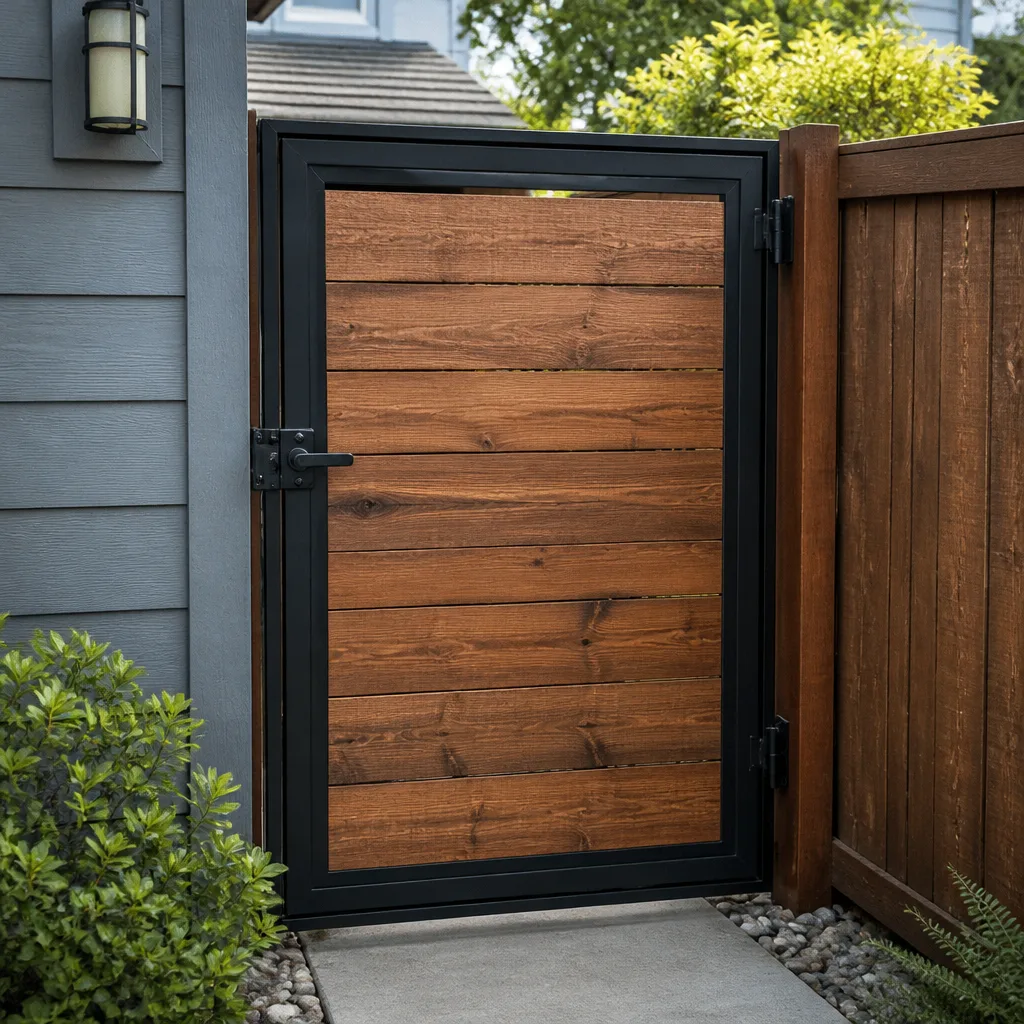 Wood & steel frame
 Farm & ranch
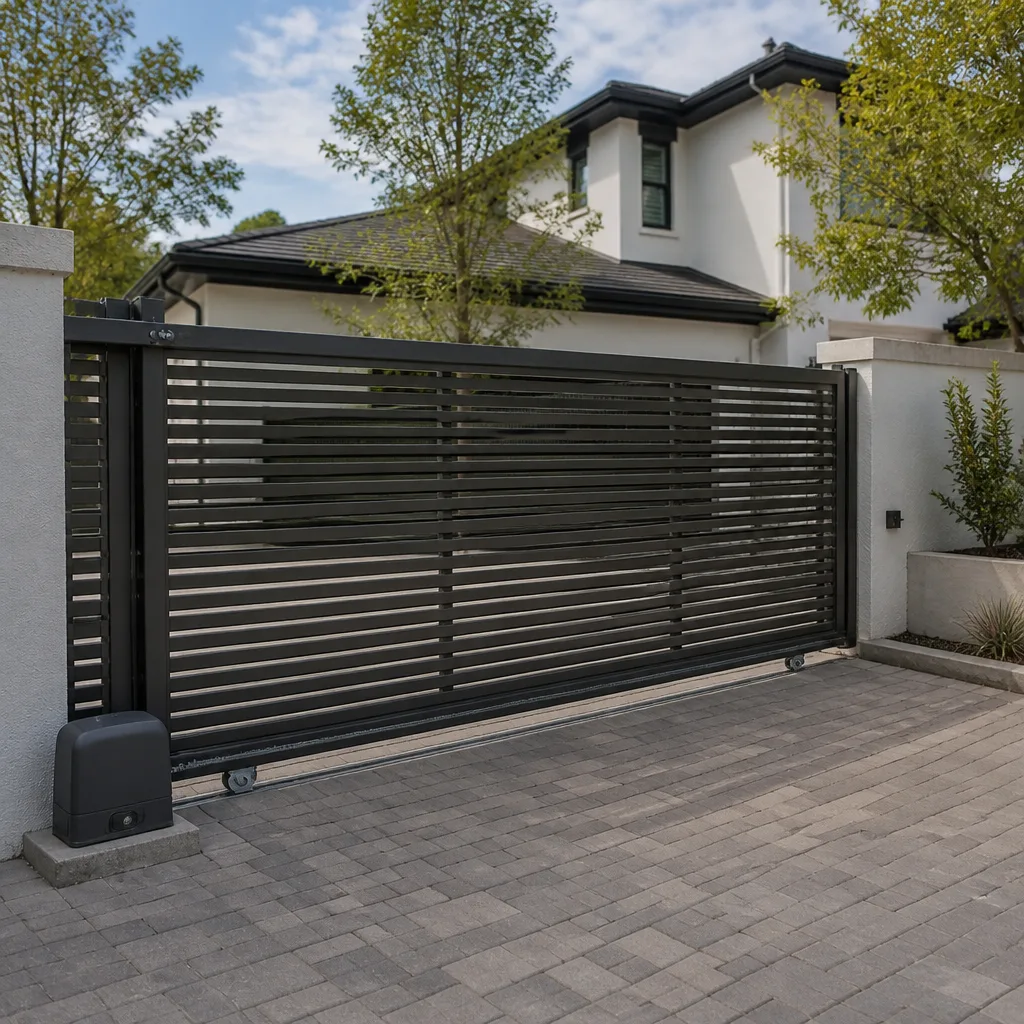 Sliding driveway gates
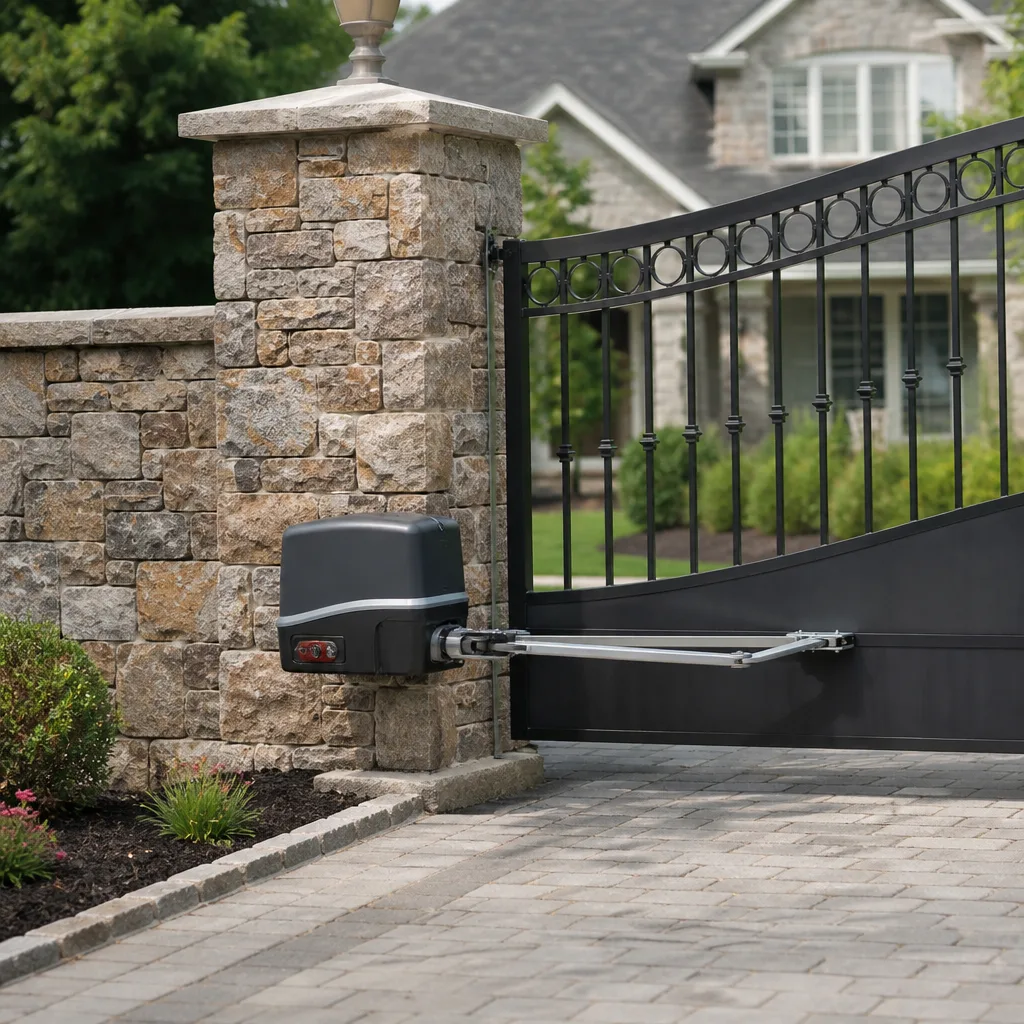 LiftMaster operators
Free on-site gate assessment - hinges, posts, and your LiftMaster or Nice gate operator checked before anything is quoted
The assessment is free and the quote is the invoice.
Get your free estimateGate Repair Warning Signs: A Surprise Homeowner’s Reference Guide
Most gates announce their failure well before they fail. The bearing that’s starting to seize growls for weeks. The control board that’s drifting loses its remote range long before it stops accepting commands. The hinge that’s worn oval squeals on every cycle while it still works. What surprises homeowners isn’t that gates break. It’s that the symptoms were there the whole time, speaking a language nobody taught them to read. This guide translates. We’ll show you what each sound, hesitation and visual cue means, where in the system the fault lives, and which warning signs are the cheap-to-fix kind versus the ones that lead to a bigger repair if you wait. It’s written for Surprise homeowners and property managers who’d rather book a service call on their schedule than discover a dead gate with a car full of groceries behind it.
Quick Answer
A gate that hesitates, grinds, reverses on its own, loses remote range, or leaves fresh metal dust on the track is telling you something specific is wearing or failing, not that the gate is “getting old.” The pattern and location of the warning sign usually points to one of four systems: the motor/operator, the control board, the safety loop or photo-eye, or the mechanical hardware like hinges, rollers and track. Catching the symptom early usually turns a repair into an adjustment. Ignoring it usually turns an adjustment into a repair.
Styles & brands we work with
- Wrought iron
- Wood & steel frame
- Farm & ranch
- Sliding driveway gates
- LiftMaster operators
Table of Contents
- Sound Diagnostics: What Grinding, Clicking, Humming and Silence Mean
- Reading Visible Wear: Hinges, Rollers, Tracks and Posts
- Behavioral Warning Signs in Automated Gates
- Locating the Fault: Operator, Control Board, Loop or Hardware
- Warning Signs Specific to Surprise’s Climate and Housing
- Which Signs Are $150 and Which Are $1,200 in the Making
- A Monthly Walk-Around Routine You Can Actually Keep
- Where the DIY Line Is: What Not to Open or Adjust
Sound Diagnostics: What Grinding, Clicking, Humming and Silence Mean
Sound is the earliest diagnostic data a gate gives you, and it’s free to collect. Get in the habit of standing near the gate during one full cycle and just listening. Every noise falls into a recognizable family, and each family narrows the fault to a handful of parts.
Mechanical noise (manual and automated gates alike)
- Grinding under load: metal-on-metal contact, usually a seized roller bearing, a hinge pin running dry, or a worn drive gear in a slide gate’s rack. Grinding that gets louder under extra weight (a heavier vehicle, wind pressure) points toward the load-bearing hardware, not the motor.
- Sharp squeal on cycle: friction at a pivot point. Hinges and roller pins squeal before they seize. This is the cheapest sound on the list to resolve, because it’s caught early.
- Rattling or knocking: loose fasteners, a worn bush on a swing arm, or gate panels flexing where their brackets have loosened. On older swing gates the post-to-frame connection is a common source.
Electrical and operator noise
- Repeated clicking with no movement: the control board is sending a signal the motor isn’t answering. Could be a failed start capacitor, a relay, or a safety input refusing to release. The click pattern tells a technician which.
- A steady hum with no travel: the motor is powered but the load is stuck or the drive is disconnected. On slide gates with a rack-and-pinion drive, a jammed pinion or a rack that’s come out of mesh sounds exactly like this. Never keep powering a humming motor hoping it frees up; the windings take the damage.
- Silence, total: no click, no hum, nothing after a command. That usually moves the diagnosis away from the motor and toward power supply, the control board, or the receiver. Silence is a control-side symptom more often than a motor-side one.
Surprise homes with long driveways built onto larger desert lots often have their operator set back in a position that muffles sound from the house. If you can’t hear the gate at all from inside, walk out to it once a month. Sound is your early-warning system, and it only works if you’re in range of it.
Reading Visible Wear: Hinges, Rollers, Tracks and Posts
Visual inspection is where you build a timeline rather than just a status. Most components give you a wear pattern before they give you a failure. What you’re looking for is a pattern that’s accelerating, or a component that’s moved from “worn” to “distorted.”
What to check and what each pattern tells you
- Hinges and pivot points: look for a shiny, polished wear ring around the pin. A small ring is normal. A ring that’s spread into an oval, or a hinge plate that no longer sits flat, means the load is being carried by the wrong part of the hinge and it’s on the way out.
- Rollers (slide gates): roll the gate by hand and watch each roller. A flat spot, a chunk missing, or a roller that stops turning and skids along the track means it’s failed. Skidding rollers then wear the track, which is a bigger repair than the roller.
- Track or guide rail: look for fresh metal dust, bright streaks, or a groove worn into the rail. Metal dust on the track is one of the most reliable advance warnings in gate work, because it means something is grinding that shouldn’t be.
- Gate posts: check for lean. A post that’s drifting out of plumb changes the geometry of every swing or slide cycle and loads the hardware asymmetrically. Lean that’s increasing month over month is a footing issue, not a hinge issue.
- Gate frame: look at welds and bolt joints. A hairline crack at a corner weld flexes with every cycle and grows. Straight gate panels and square corners are the healthy baseline.
In Surprise we also watch the paint and finish on the frame. Sun exposure and dry heat are hard on coatings, and a small spot of exposed metal or chip on the gate frame spreads faster here than homeowners expect. That’s not structural on its own, but the corrosion underneath it is where the trouble starts on an Arizona gate. When we do a gate repair visit, checking wear patterns on hardware is part of the standard inspection, not an upsell.
Behavioral Warning Signs in Automated Gates
An automated gate’s behavior is a stream of data about its electrical and control systems. Three behaviors in particular deserve attention: hesitation, false reversal, and shrinking remote range. Each has a mechanical explanation, and none of them means “the gate is just being temperamental.”
Hesitation before moving
A delay between the command and the gate starting usually means the system is taking longer to satisfy its pre-move checks. That can be a capacitor that’s lost its punch, a control board whose logic is starting to degrade, or an operator struggling against excess mechanical resistance. A two-second hesitation is often the earliest visible symptom of a motor that’s working harder than it should.
False reversal or mid-cycle stopping
The gate starts to close, then reverses for no obvious reason, or stops partway and waits. This is almost always a safety input telling the board something is in the way. Obstruction sensors, photo-eyes (the safety beams across the opening) and loop detectors all feed that decision. A misaligned photo-eye, dust haze on a sensor lens, or a vehicle loop that’s losing sensitivity all produce the same symptom: the gate refuses to finish a safe-looking cycle. Never treat a false reversal as an inconvenience to override. It’s one of the systems doing its job in an unclear way, not misbehaving.
Remote range reduction
Remotes that worked from forty feet now only work from fifteen. Range loss is a signal path symptom, not a remote-battery symptom (though a weak battery is worth ruling out first). On the board side it can be the receiver, the antenna connection, or interference from the surrounding environment. On the operator side it can be a power supply that’s sagging under load. If your neighbor’s gate remote works fine while yours doesn’t, that’s useful diagnostic data, because it means the interference is local to your system.
Locating the Fault: Operator, Control Board, Loop or Hardware
You can narrow the fault to one of four buckets without opening a panel or touching a wire. The trick is to use symptoms that only one bucket can produce, so the answer falls out of the evidence rather than a guess.
The four systems and their signatures
- Operator (motor and drive): the gate moves, but slowly, noisily, or with visible strain. Grinding under load, humming without travel, and hesitation all point here. The operator is failing if the gate does move but won’t carry the load.
- Control board: the gate doesn’t move at all, clicks without moving, or behaves inconsistently (sometimes opens, sometimes doesn’t). Silence and erratic logic both point to the board. Board faults also show up as a remote that’s lost its range or a system that needs to be reset more often than it should.
- Loop detector / safety sensors: the gate reverses, refuses to close, or refuses to open while a vehicle’s over the loop. Intermittent behavior that correlates with position or with vehicles being nearby is the hallmark. Sensors that get dirty or move slightly trigger this.
- Mechanical hardware: the gate moves smoothly by hand but misbehaves when powered, or it moves with a squeal, grind or rattle that follows the hardware. You can also test this one: if the gate is smooth under hand operation but jerky under power, the fault is electrical; if it’s jerky both ways, it’s mechanical.
One test worth knowing: push the gate through one cycle by hand. If it moves smoothly and silently, the hardware is healthy and the fault is on the electrical side. If it resists, grinds, or catches, the mechanical side needs attention regardless of what the electrical system is doing. That single test tells you which specialist lane to start in, and it’s the same first step we take on an electric gate repair call.
We work across the major operator brands, including LiftMaster, FAAC, DoorKing and Mighty Mule, and that matters at diagnosis time. The same symptom can mean different things depending on the board inside the housing, and a brand-agnostic approach means the diagnosis follows the evidence instead of a fixed script.
Warning Signs Specific to Surprise’s Climate and Housing
Gates in Surprise age in ways that gates in wetter, cooler climates don’t. Dry heat, intense sun, windblown dust and the local soil all leave their signature, and knowing what those signatures look like helps you separate climate wear from a real failure in progress.
The three Surprise wear patterns
- Rust in the wrong places: rust is normal on bare steel and on gate hardware at the ground, but rust appearing near the top of a gate, on the operator housing, or on fasteners that see sun but not moisture is a warning sign. It usually means a finish has failed earlier than it should have, and the corrosion underneath it is spreading where you can’t see it.
- UV damage on exposed wiring and insulation: the desert sun degrades wire insulation, cable jackets and the plastic housing on sensors over time. Sun-weathered insulation on photo-eye or loop wiring shows as cracking, discoloration or a chalky surface. This is worth flagging because it’s invisible until it fails as a false reversal or a dead safety sensor.
- Sand infiltration in the drive assembly: the wind in and around Surprise moves dust and fine grit, and it finds its way into slide gate tracks and rack-and-pinion assemblies. You’ll notice a grit sound, a slight roughness through one part of the cycle, or a growing pile of dust at the track ends. Grit acts like sandpaper inside a drive train, so it’s worth cleaning out before it wears the pinion and rack.
Surprise’s mix of newer master-planned neighborhoods and older properties means we see a wide range of gate systems around town, some only a few years old and some with hardware that’s near the end of its service life. Age of the gate isn’t the diagnostic, though. The pattern of wear is. A gated community near the edge of town and a single driveway gate on a rural lot both tell you what’s happening through the same sounds, sights and behaviors. Sun and dust just get there first.
Which Signs Are $150 and Which Are $1,200 in the Making
Not every warning sign carries the same price tag. Some are adjustments that take minutes. Others are early symptoms of a failure that, if left alone, takes out the component next to it. Here’s the triage we use, sorted by severity.
Low-severity (likely a small adjustment)
- One hinge or pivot squealing on cycle with no visible distortion.
- A single roller that’s stopped turning but hasn’t damaged its track.
- A photo-eye or sensor lens that’s dusty or has a cobweb across it.
- A remote with reduced range where the remote battery is fine and the system otherwise behaves correctly.
Moderate-severity (diagnose within weeks)
- Consistent hesitation before the gate moves.
- Intermittent false reversal that happens more than once a week.
- Grinding under load that stops when the extra weight is removed.
- Rust spotting near the operator or on sun-exposed fasteners.
- Visible lean in a gate post that’s changing slowly.
High-severity (address now, not next season)
- Fresh metal dust on a track, or a groove worn into a rail.
- A gate that moves under hand power but fails to move under operator power.
- Mid-cycle stops that leave the gate partway open, especially on a slide gate.
- Any hairline crack in a gate frame weld or at a load-bearing bracket.
- Exposed or cracking wiring insulation anywhere near the operator or sensors.
The pattern is simple. A noise that only exists at one point in the cycle is usually a hardware adjustment. A noise that’s getting louder, or a symptom that’s becoming more frequent, is a component failure in progress. A gate that’s smooth by hand but fails under power is an electrical fault. Catching these early is what keeps an adjustment from becoming a replacement. If you’re in Surprise and you’re not sure which bucket your gate belongs in, a free estimate is the cheapest way to find out.
A Monthly Walk-Around Routine You Can Actually Keep
The best diagnostics are the ones you’ll actually do. A five-minute walk-around once a month covers almost every warning sign in this guide, and it gives you a baseline to compare against. Do it on the same day each month so you have a rhythm, and don’t do it while a vehicle is on the loop.
- Listen to one full cycle. Open and close the gate and stand close enough to hear every part of the cycle. Note any new sound, and note when in the cycle it happens (start, mid-travel, stop).
- Watch the travel. Look for hesitation at the start, any mid-cycle pause, and any auto-reverse. A healthy cycle is one smooth motion.
- Walk the track and hinges. Run a hand or a rag along the track on a slide gate, or work the hinges on a swing gate. Look for metal dust, bright streaks, and anyhinge that’s distorted in shape.
- Check the posts. Put a level against the gate post, or just eyeball a straight line up the post. Note any lean and whether it’s new.
- Look at wiring and sensors. From outside the housing, examine the visible cable, insulation and sensor housings for cracking, discoloration, dust buildup or physical damage.
- Test the safety functions. While the gate is closing, walk through the path (or use a test object) and confirm it reverses. That check is non-negotiable, because the reverse-on-obstruction function is what stops a gate from hitting a person or a car.
Write down what you find. A short log of “no changes” is just as useful as a log of problems, because it lets you see whether something is progressing. In Surprise, the dust patterns along a track and the UV condition of wire insulation are the two items most worth putting on a schedule, since they change slowly and quietly.
Where the DIY Line Is: What Not to Open or Adjust
Most of what’s in this guide is safe to observe and safe to test. Some of it is genuinely dangerous to touch. Drawing that line clearly is part of being honest about gate repair, so here it is.
- Do not open the operator housing or the control board enclosure. Those housings contain mains voltage. Even with the power switched off at an external disconnect, a capacitor inside an operator can hold a charge. Trained technicians work on these with the power isolated and verified, and that’s not a step to shortcut.
- Do not reach into a slide gate’s path, or under a gate panel, to clear debris. Automated gates move with enough force to injure. Clear obstructions only when the power is off and the gate is fully stationary.
- Do not adjust or bypass a safety sensor or photo-eye. These are the systems that reverse the gate when something’s in the way. If a sensor is failing, the fix is to repair or replace it, not to defeat it.
- Do not try to straighten a leaning gate post by hand or with a vehicle. Posts need proper footing depth, and moving one the wrong way can bring down more than the post.
- Do not force a gate that’s stuck mid-travel. A jammed slide gate can come off its track with enough force to hurt someone. Call a technician instead.
Everything on the observation side is fair game. Listen, look, log, test the reverse function, and clean the tracks. Those steps catch most warning signs early. When you get to a symptom that requires opening a panel or the diagnosis is unclear, that’s the point to hand it off. You’ll get an honest answer on what’s wrong and what it will take to fix it.
Common Mistakes to Avoid
- Treating a hesitation as “quirky.” A gate that starts slowly is telling you the motor is working harder than it should. Waiting until it stops entirely usually turns a smaller repair into a motor or control board replacement.
- Overriding a false reversal by disconnecting a sensor. This removes the function that protects people and vehicles. It also hides the real fault, which is almost always a sensor, a loop or a control board issue that a technician can find in minutes.
- Lubricating everything to quiet the noise. Some components take the right lubricant in the right place, and others shouldn’t be greased at all because grease traps dust. In Surprise, the dust that collects in a greased hinge becomes an abrasive paste. Ask before you spray.
- Ignoring metal dust on the track. Fresh metal dust means two parts are wearing each other down. Cleaning the dust hides the symptom but not the cause, and the wear keeps accelerating.
- Assuming an aging gate needs replacing. Most of what we see on Surprise gates is a specific repair or adjustment, not a full replacement. The verdict should follow the diagnosis, not the age of the gate.
- Skipping the post check. A post that’s slowly leaning changes the geometry of every cycle. Left alone, it takes the hinges, the operator and the track with it.
- Testing the reverse function once and calling it done. The reverse-on-obstruction function is the gate’s most critical safety system. It belongs in a monthly check, not a once-a-year one.
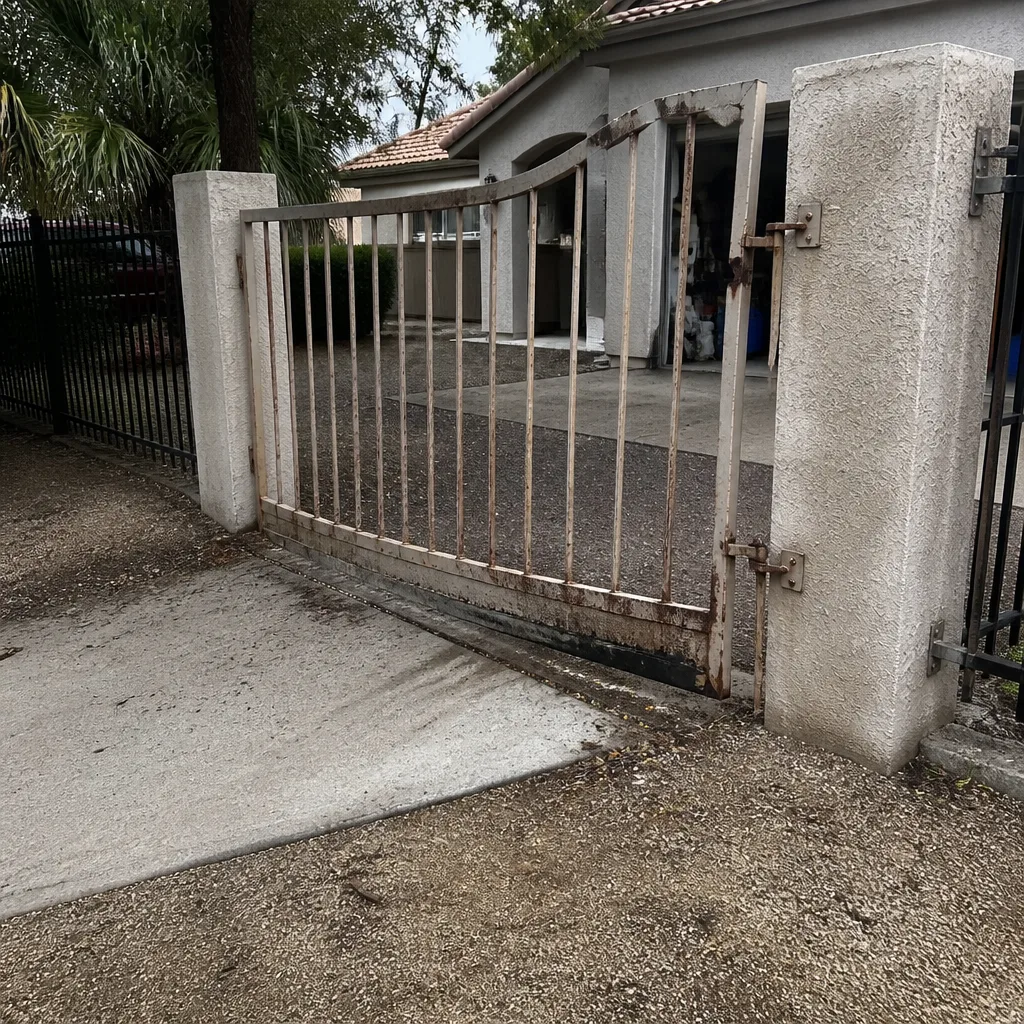
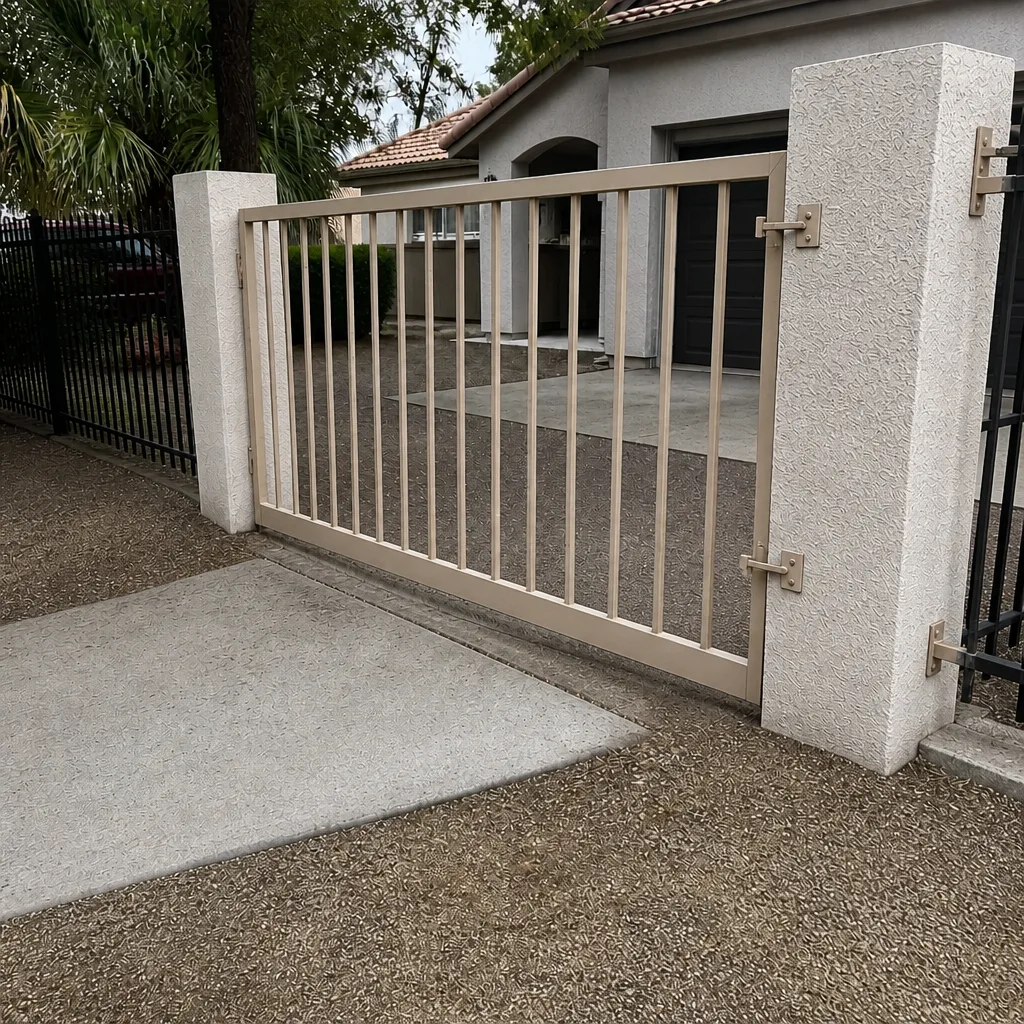
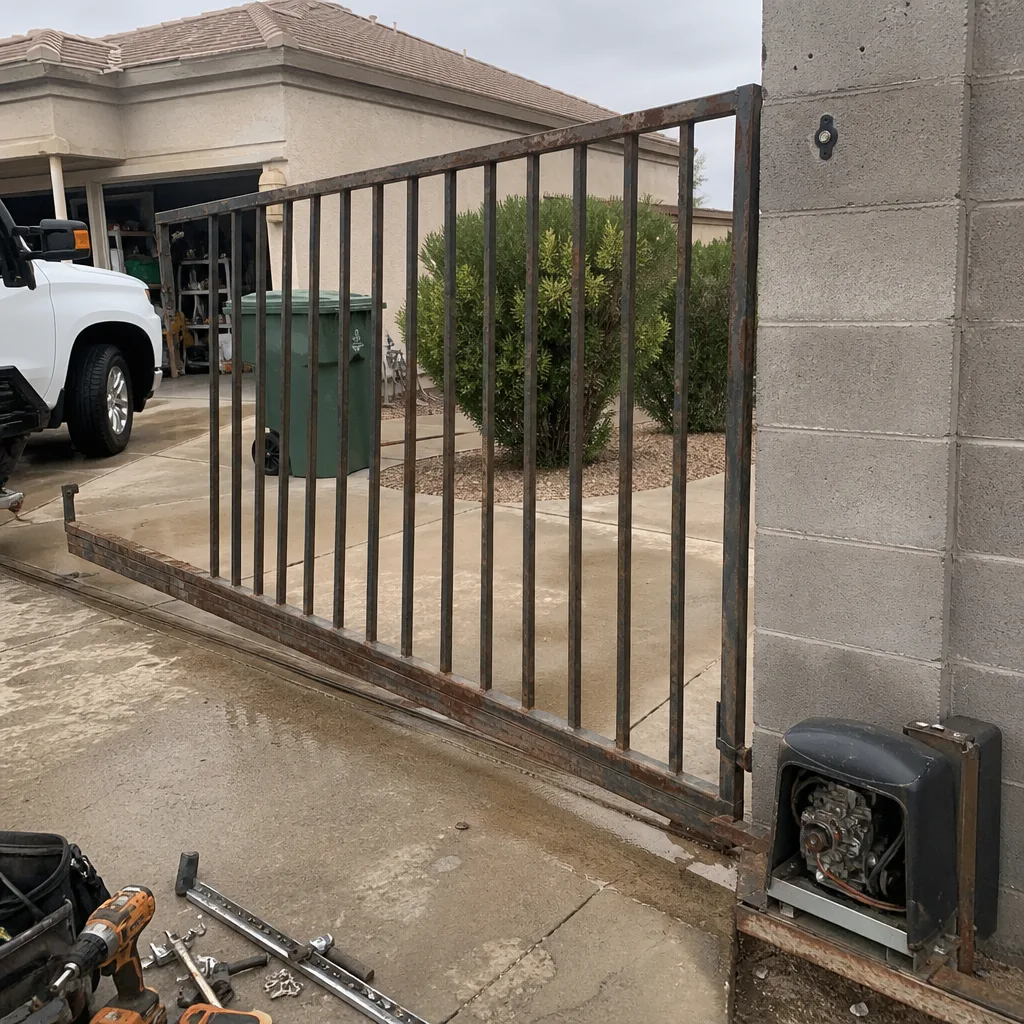
See the difference
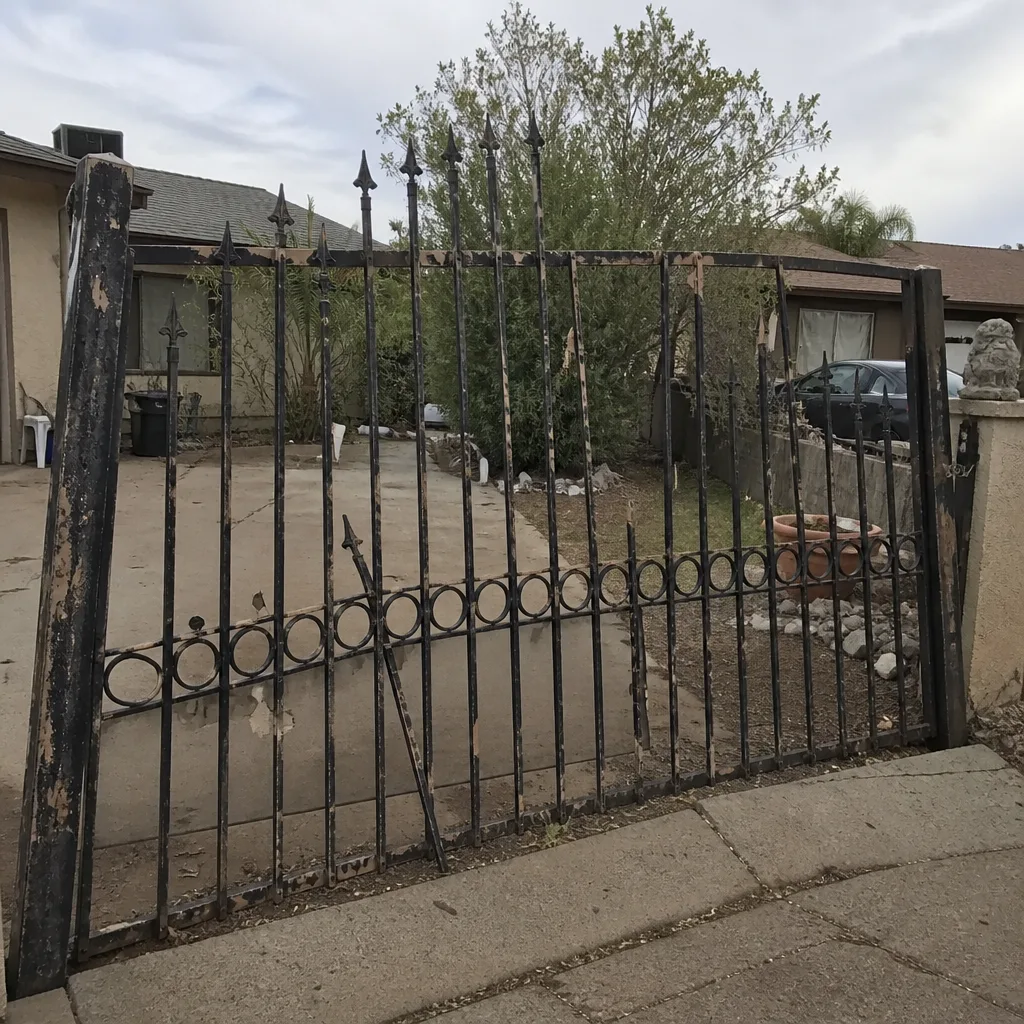 Before
 After
 Before
 After
 Before
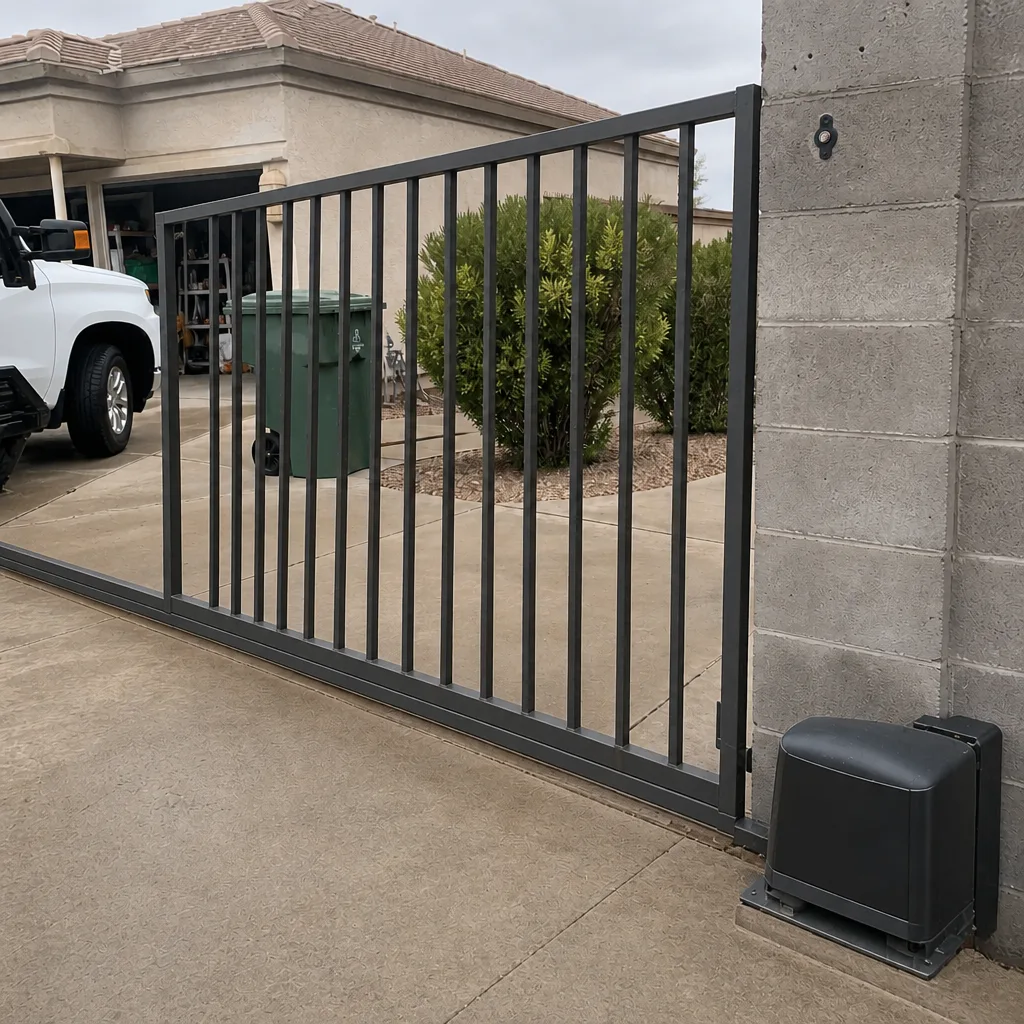 After
When to Call a Professional
Call a professional when a warning sign points into the operator housing, the control board, or the wiring. Also call when the gate is smooth by hand but won’t move under power, when a slide gate stops mid-travel, when a post is leaning, or when you can’t tell which system is causing a problem. Those signs mean a fault that requires tools and diagnostic equipment to diagnose correctly, and opening the wrong panel can put you at risk. For a slow-leaning post or a persistent false reversal, the longer you wait the more adjacent parts get damaged. We can work with your insurer if a failure ends up being an insurance matter. Gate Repair Surprise offers free estimates in Surprise, and our technicians have up to 13 years of experience across the major operator brands. Call (877) 657-0401 for an exact quote. Estimates are free.
Frequently Asked Questions
The most common warning signs in Surprise are hesitation before the gate moves, grinding or squealing during the cycle, fresh metal dust on the track, false reversals, shrinking remote range, and rust or cracked wire insulation. Most of these appear weeks before a full failure, which is why a monthly listen-and-look routine catches almost all of them early.
Not always. Grinding that happens at one point in the cycle is often a single worn roller or a dry hinge, which is a small fix. Grinding that gets louder under load or has already left metal dust on the track is more serious, because it means two parts are wearing each other down and the damage is accelerating.
Hesitation usually means the system is struggling to meet its pre-move checks. Common causes are a weakening start capacitor, a control board that’s beginning to degrade, or an operator fighting excess mechanical resistance. Because the same symptom can come from different systems, a diagnostic visit is the fastest way to identify the cause.
Not necessarily. Remote range reduction is more often a receiver or antenna issue, a power supply that’s sagging, or environmental interference than a broken remote. Check the remote battery first. If a fresh battery doesn’t fix it, the fault is usually on the receiver or control board side.
For many repair calls, yes. We answer 24/7 and run fast dispatch from 7am to 7pm, Sunday through Friday, so a same-day visit is often possible. Call (877) 657-0401 for an exact quote. Estimates are free.
We work on whatever gate you have, including LiftMaster, FAAC, DoorKing and Mighty Mule systems. That brand-agnostic approach matters at diagnosis time, because the same symptom can mean something different depending on the board inside the operator.
The Bottom Line
A gate speaks through its sounds, its behavior, its hardware and its wiring. Grinding that gets louder, hesitation before movement, false reversals, shrinking remote range, metal dust on a track, leaning posts and cracked insulation are all early data points, and each one points to one of four systems. Read those signs monthly, track whether a symptom is progressing, and test the reverse function every time you do. Then hand off anything that requires opening the operator or the control board to a trained technician. In Surprise, catching a warning sign early is what makes a small adjustment stay a small adjustment. Call (877) 657-0401 for an exact quote on any repair, diagnostic or new install. Estimates are free, the price is agreed before any work starts, and our technicians have up to 13 years of experience.
If you have a gate problem and want a straight answer from a specialist, we can help. Gate Repair Surprise is a single-trade specialist, and every visit is focused on your gate, from Gate Repair Surprise to an install. We work across the major operator brands, our technicians have up to 13 years of experience, and we offer free estimates throughout Surprise. Call (877) 657-0401. We answer 24/7. Fast dispatch from 7am to 7pm, Sunday through Friday. A call outside dispatch hours is booked into the next opening, Sunday through Friday, 7am to 7pm.
Written by the team at Gate Repair Surprise.