
Last updated November 15, 2026
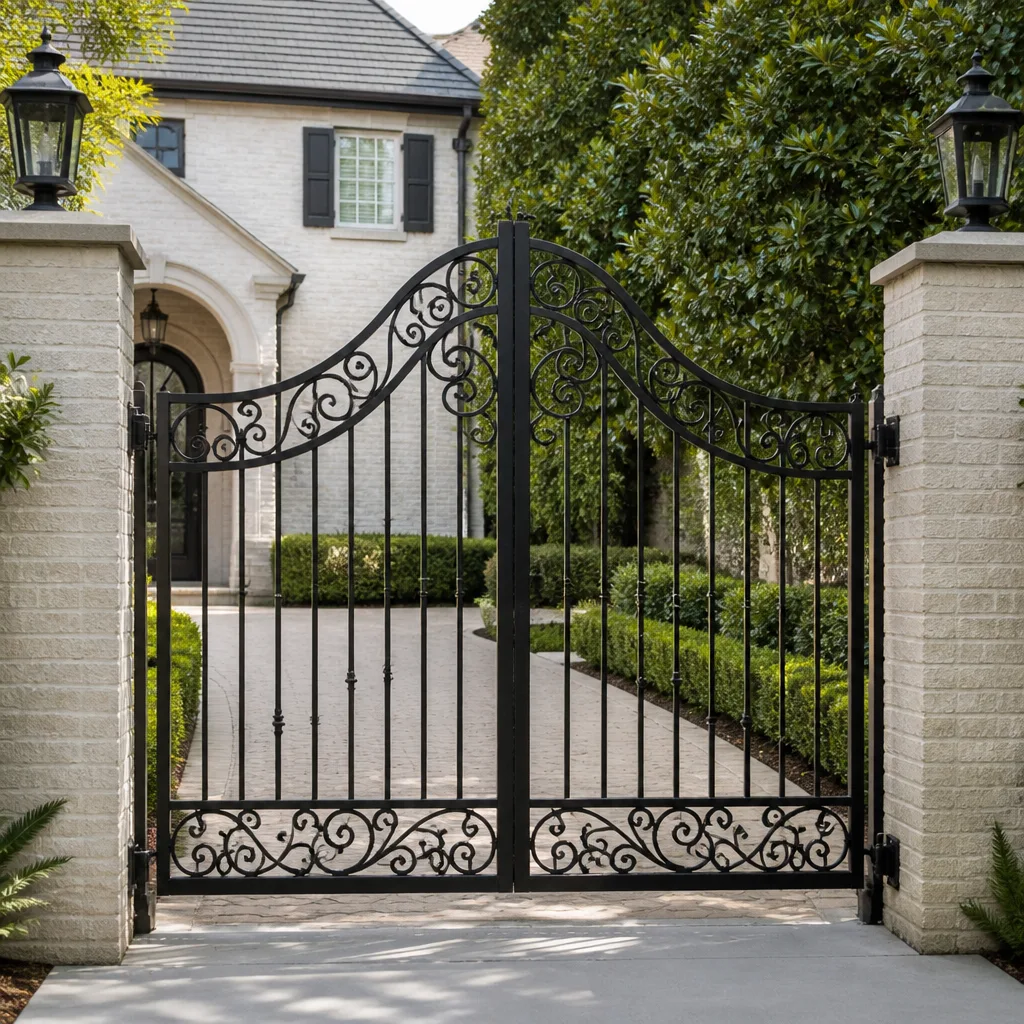 Wrought iron
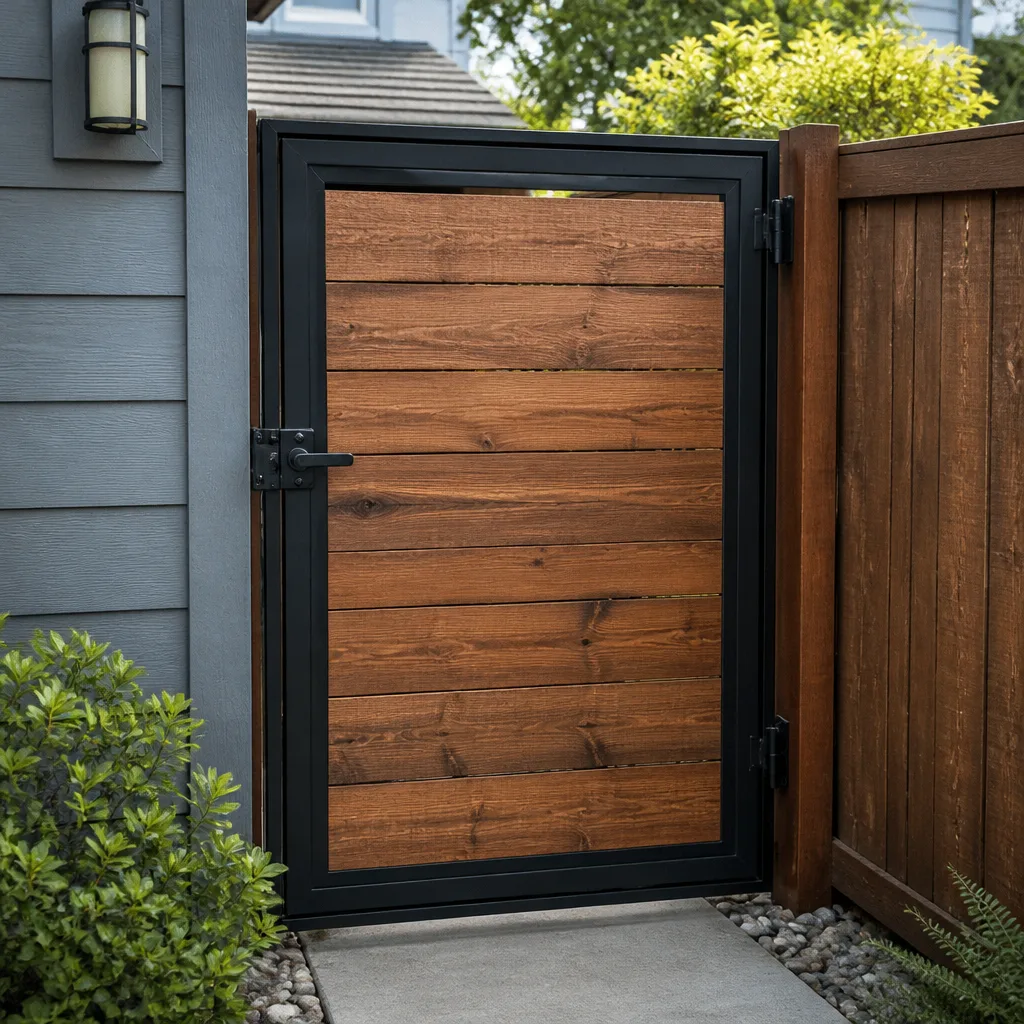 Wood & steel frame
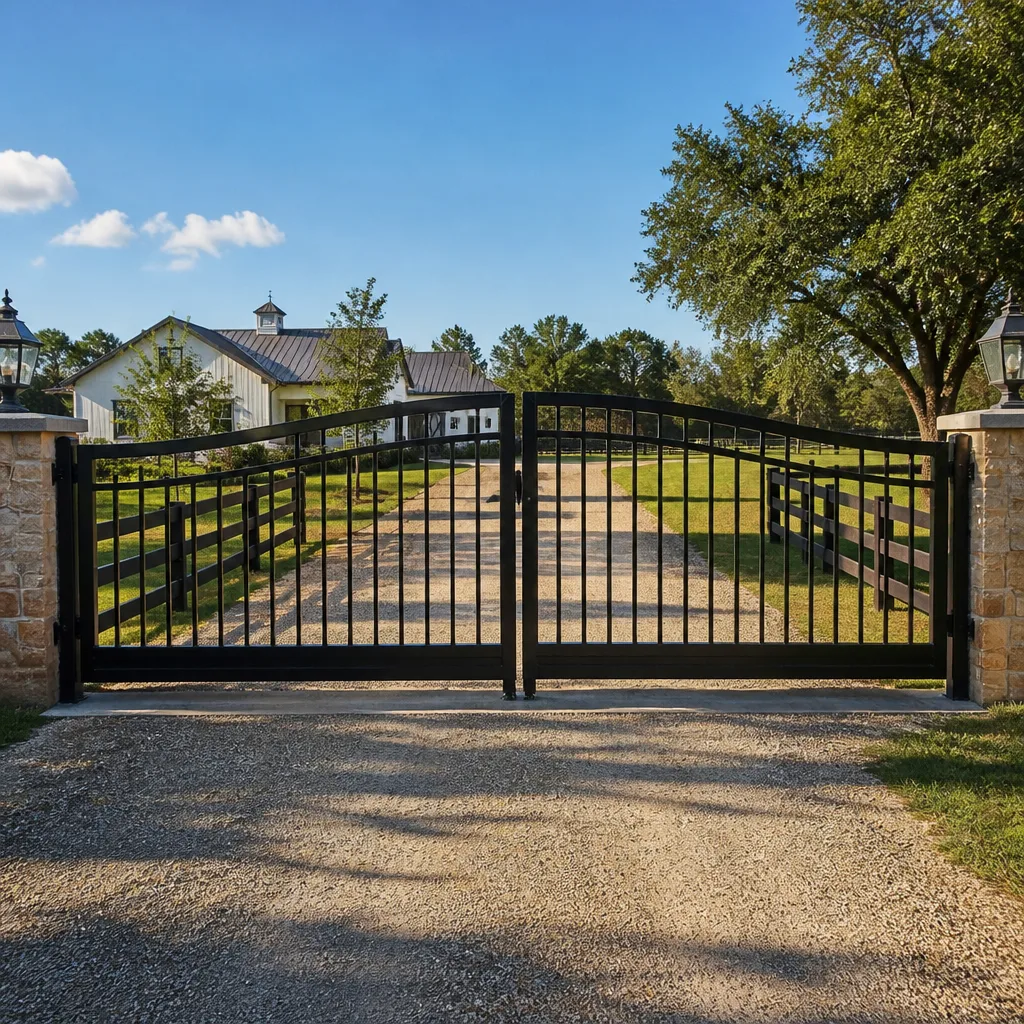 Farm & ranch
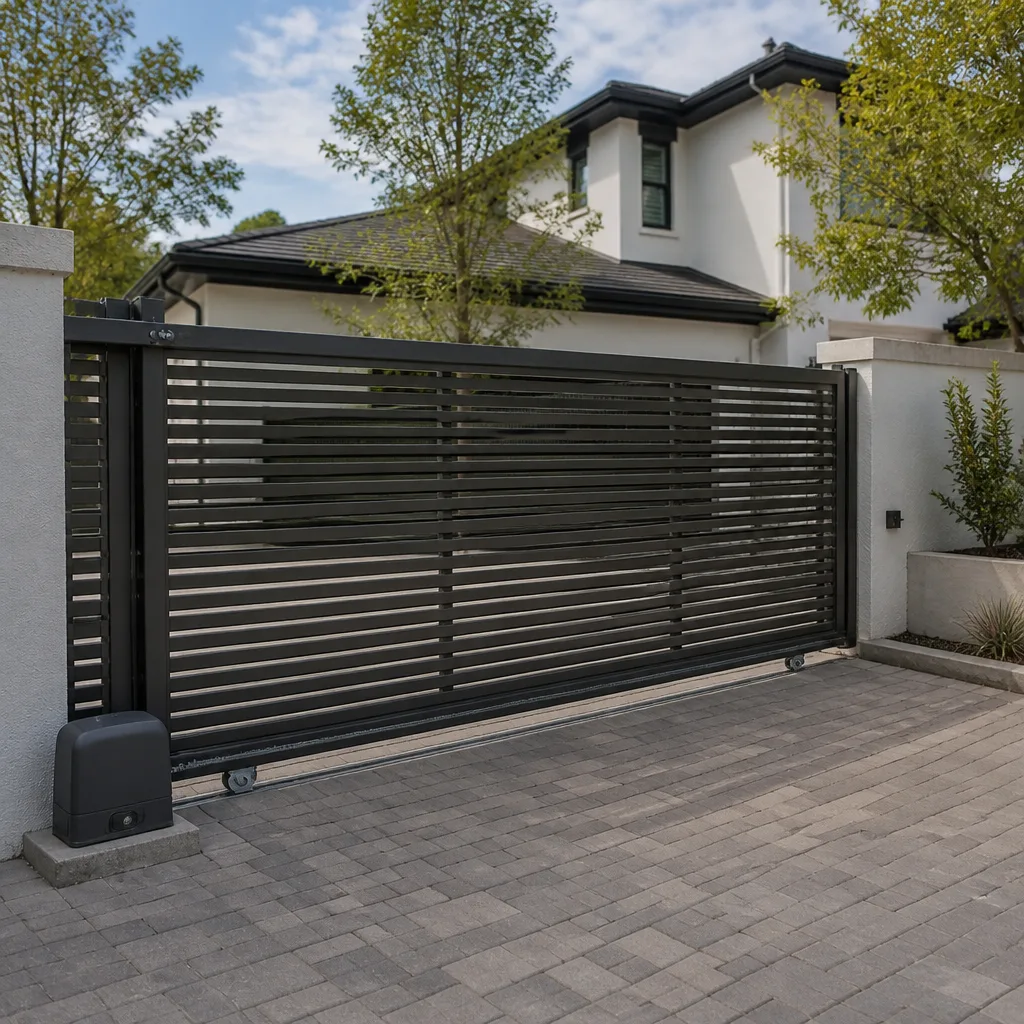 Sliding driveway gates
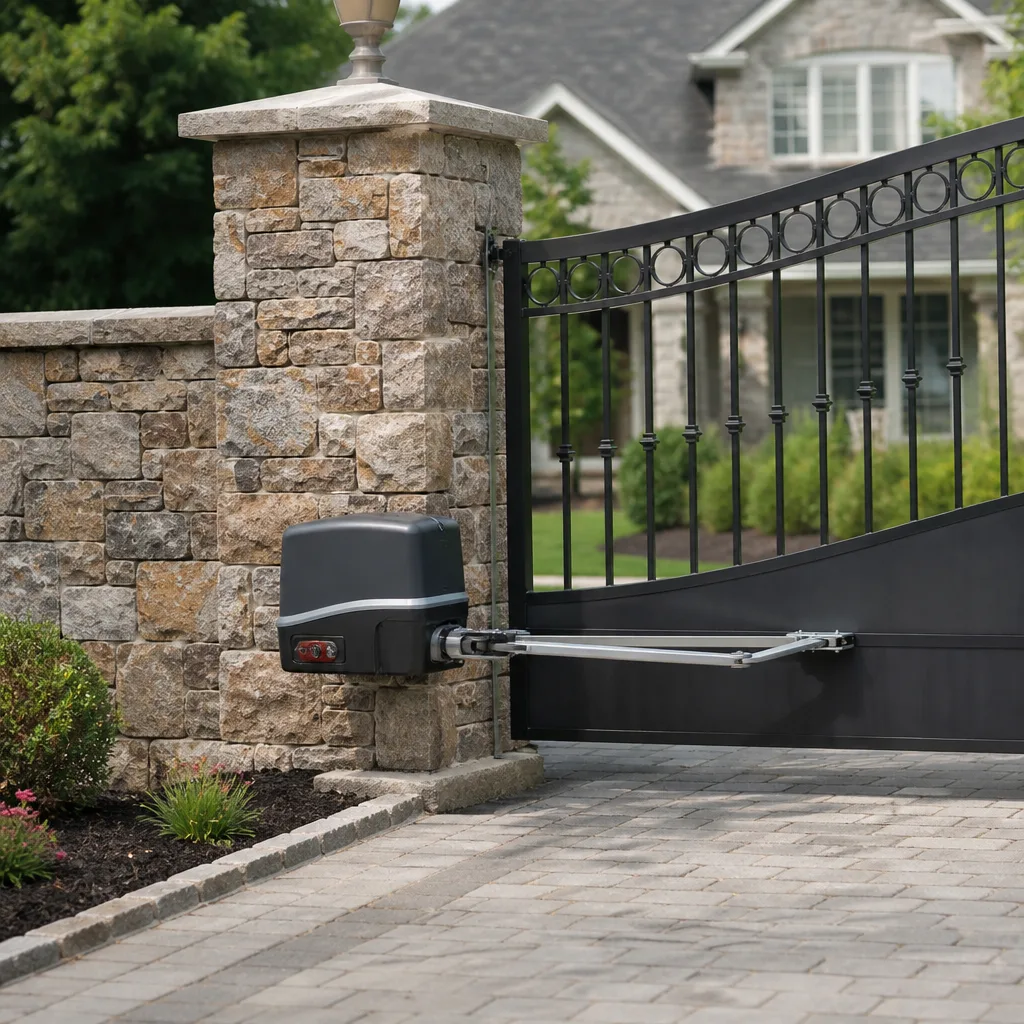 LiftMaster operators
Free on-site gate assessment - hinges, posts, and your LiftMaster or Nice gate operator checked before anything is quoted
The assessment is free and the quote is the invoice.
Get your free estimateHow to Hire a Gate Repair Contractor in Surprise: A Step-by-Step Guide
Most homeowners hire a gate contractor the same way they hire a landscaper: a truck in the driveway, a friendly handshake, a number on a business card. That approach fails on automated gates. A contractor who confidently quotes your LiftMaster repair but can’t tell a Logic 5.0 control board from a Logic 6.0 is about to learn gate systems on your property, on your budget. Surprise has plenty of general handymen who will take the job. Far fewer can actually diagnose an operator fault, read a wiring diagram, and source the right part. This guide hands you the exact questions and checks that separate gate specialists from everyone else, so the person who shows up is the person who can fix it.
Quick Answer
To hire a gate repair contractor in Surprise, verify Arizona licensing and insurance first, then ask three technical questions that only a gate specialist can answer (control board model, operator brand, and safety sensor diagnosis). A legitimate contractor explains the failure in plain terms, provides a written estimate before any work starts, and can name the specific parts they’ll use. If a quote is vague or unusually low, treat it as a warning, not a deal.
Styles & brands we work with
- Wrought iron
- Wood & steel frame
- Farm & ranch
- Sliding driveway gates
- LiftMaster operators
Table of Contents
- What Licensing and Insurance Should a Gate Contractor in Surprise Have?
- Three Technical Questions That Expose a Generalist
- How to Read a Gate Repair Quote in Surprise
- Verifying Brand Authorization for LiftMaster, Viking, and DoorKing
- What a Legitimate Repair Timeline and Follow-Up Looks Like
- Electric Gate Repair: Where Most Contractors Get Lost
- Repair vs. Replace: Hiring for the Full Lifecycle
- Red Flags and Final Questions to Ask
What Licensing and Insurance Should a Gate Contractor in Surprise Have?
Any contractor working on an automated gate in Surprise should carry a current Arizona contractor license appropriate to the work and show proof of general liability insurance and workers’ compensation coverage. Ask for all three before anyone touches your gate. That isn’t paperwork theater. A gate operator combines high-voltage wiring, a heavy moving panel, and pinch points that can crush. If the person servicing it is unlicensed or uninsured and something goes wrong, you’re exposed.
Here’s what to actually check, in order:
- License status. Ask for the license number and confirm it through the state’s online lookup. The license should be active, not suspended, and match the name on the estimate.
- General liability insurance. Request a certificate of insurance. Call the insurer to confirm it’s current. A certificate that expired last quarter tells you something.
- Workers’ compensation. If a helper gets hurt on your property and the contractor has no coverage, the liability can land on you as the property owner.
- Written scope of work. A licensed contractor gives you a written estimate that spells out exactly what’s being repaired, which parts are being replaced, and the total cost.
- Permits where required. For new gate installation or structural changes, ask whether the city of Surprise requires a permit for your specific project. A contractor who brushes the question off is a contractor who cuts corners elsewhere.
Do not accept a photo of a license on a phone as verification. Look it up. This is the single most important step in the whole process, and most homeowners skip it.
Three Technical Questions That Expose a Generalist
A general handyman can change a hinge. An automated gate system is a different animal. Ask these three questions on the phone before you book anyone, and listen for how specific the answer is. Vague answers are your signal.
Question 1: “Which control board does my operator use, and how do you diagnose a fault on it?”
A gate specialist will ask you the operator brand and model, then tell you which board family it uses and how they’d test it. LiftMaster residential operators, for example, run on specific Logic board generations, and the diagnostic path differs across them. Someone who says “I’ll just replace the board” without knowing which board is guessing with your money.
Question 2: “How do you test the safety sensors and reverse the operator.”
Every automated gate has safety devices that stop or reverse the gate if something is in its path. A real technician can describe how they test the photo-eye, the loop detector, or the edge sensor and how they confirm the reverse function works before they leave. This is a safety answer, not a sales answer.
Question 3: “Which brands do you work with, and which ones do you stock parts for?”
The right answer is a range. If a contractor only services one manufacturer, every problem looks like that manufacturer’s problem. At Gate Repair Surprise, we work on whatever gate you have, from LiftMaster and FAAC to DoorKing and Elite. When the answer is “I mostly do Viking and Ghost Controls,” that’s useful information.
How to Read a Gate Repair Quote in Surprise
A trustworthy gate repair quote itemizes the failure, the parts, and the labor, and it tells you the total before anyone starts. A quote that says “gate repair: $250” with no breakdown is not a quote. It’s a placeholder, and how it gets filled in depends on how much you push back later.
Here’s a side-by-side of what the signals mean:
- Specific line items: “Replace LiftMaster operator control board, test sensor alignment, re-secure hinge post” is a real quote. “Fix gate” is not.
- Unusually low estimate: Often means the cheapest aftermarket part, a reused component, or a job quoted low to win and padded later. It is not a bargain.
- No written scope: Walk away. You need documentation of what was quoted in case the fix doesn’t hold.
- Parts not named: Ask which brand and model of part is going in. If they won’t or can’t tell you, they don’t know.
- Push to replace the whole gate: A gate operator fault or a single failed motor is not a reason to replace an entire gate. A specialist repairs first.
- Cash-only pressure: Legitimate contractors quote in writing, take normal payment, and give you a receipt and warranty terms.
In the Surprise market, quotes for the same repair can swing widely because the correct fix depends entirely on an accurate diagnosis. The written estimate you approve before work starts is your protection. If a contractor tries to change the price mid-job, that’s a conversation to have before the wrench comes out, not after.
Verifying Brand Authorization for LiftMaster, Viking, and DoorKing
Brand authorization matters for one reason above all others: warranty protection. When a LiftMaster, Viking, or DoorKing operator is serviced with genuine parts by a contractor familiar with that platform, the manufacturer’s warranty on the part or repair stays intact. When it’s serviced with a mystery part, or by someone who “made it work,” it often doesn’t.
How to verify:
- Ask which brands the contractor is fluent in. Most gate companies work with one or two. The best work across a wide range, including commercial-class operators like DoorKing.
- Ask about genuine parts sourcing. A specialist can tell you where they source parts for your specific operator. Ambiguity here is a problem.
- Ask about warranty terms on parts and labor. Get it in writing: what’s covered, for how long, and what voids it.
- Ask whether they’ll void your existing warranty. Any contractor who’s never thought about this question is not thinking about your long-term cost.
There’s a second layer here most homeowners miss. A contractor’s willingness to be brand-agnostic is itself a quality signal. A specialist that handles LiftMaster, FAAC, BFT, Viking, Ghost Controls, DoorKing, Elite, and Mighty Mule diagnoses the actual failure. A single-brand shop tends to fit every fault into that brand’s solution. Ask what happens when the diagnosis doesn’t match the brand they push.
What a Legitimate Repair Timeline and Follow-Up Looks Like
A real repair has a predictable shape, and you can use that shape to spot a contractor who plans to disappear after payment. Here’s what a legitimate timeline looks like from first call to finished repair:
- Phone triage. The contractor asks about the operator brand, the symptom, and how the gate is behaving. They give you an idea of what the likely cause is before they arrive.
- On-site diagnosis. They test the operator, control board, sensors, wiring, and mechanical components. You get a plain-English explanation of the failure.
- Written estimate. You receive a written quote with parts and labor itemized. Nothing starts until you approve it.
- Repair. The work is done, and the technician confirms the gate cycles, the reverse safety function works, and the sensors are aligned.
- Walkthrough. They show you what was replaced and what to watch for.
- Follow-up available. If the same fault returns, you have a warranty term and a phone number to call.
The disappearing-after-payment contractor skips steps two and six. They diagnose fast, quote verbally, fix quickly, and are unreachable the moment the gate fails again. Ask upfront: “If this same problem comes back, what’s the process?” A specialist answers that easily.
Electric Gate Repair: Where Most Contractors Get Lost
If your gate is automated and it’s acting up, most of the hiring decision is really about whether the contractor understands electric gate systems as a specialty, not as an add-on. Wiring, control boards, motors, sensors, and loop detectors are a distinct skill set. A handyman who is comfortable with household wiring is not automatically comfortable with an automatic gate operator.
Here’s what to look for when you need electric gate repair in Surprise:
- They name the components. When you describe the symptom, do they ask about the control board, the photo-eye sensors, the motor, or the wiring run? A specialist narrows the fault immediately.
- They know brand-specific behavior. A FAAC fault code doesn’t read the same as a LiftMaster fault code. Familiarity with several brands is the difference between diagnosis and guesswork.
- They treat safety devices as non-negotiable. A technician who tests the reverse function and the safety sensors before leaving is a technician who knows what happens when those fail.
- They won’t refer the electrical side out. If the answer is “I only do the mechanical part,” you don’t have a gate specialist. You have a mechanic who knows half the system.
Electrical components can hold a charge and pose serious safety risk even when the gate appears dead. That’s a strong reason to have a trained technician handle automated system diagnostics rather than probing it yourself. It’s also a reason to ask the contractor to confirm their approach to isolating power before they start.
Repair vs. Replace: Hiring for the Full Lifecycle
One of the quiet costs of hiring a repair-only contractor is that, when a repair no longer makes sense, you have to start the hiring process over with a different company for the replacement. That’s two vetting processes, two diagnoses, two sets of quotes, and two points where quality can slip. When you hire for the full lifecycle, one contractor handles both.
Ask during the vetting process:
- “If this repair doesn’t make sense, would you quote a new gate or operator install?” A specialist answers yes and can talk through the options.
- “Do you handle new gate installation, or only repair?” Repair and installation under one contractor means the same diagnosis brain is doing your install.
- “What does a new install include?” A proper answer covers the gate panels, the operator, the power and wiring, the safety devices, and the site preparation.
- “Do you handle the power run and the safety edges?” On a new installation, the electrical and sensor work is a core part of the job, not an optional add-on.
For gate repair in Surprise, having a contractor who also installs is a form of insurance against being oversold on replacement. A specialist who can see the whole system has no incentive to push you one way or the other. They fix what’s fixable and replace what isn’t. And when it’s a brand-new gate you’re commissioning, that same company can handle it. That’s the reason to keep repair and installation under one roof.
Red Flags and Final Questions to Ask
Once you’ve checked the basics, the final pass is about behavior and transparency. These are the practical red flags we see when homeowners come to us after a bad experience:
- No license lookup on request. A professional invites the check. A bad contractor dodges it.
- Verbal quote only. If it’s not written, it isn’t a quote. It’s a starting point for negotiation later.
- Push to replace the entire gate for a single operator fault. Diagnosis first, replacement only when repair isn’t viable.
- No answer on warranty. A legitimate repair carries a term and terms. If they won’t commit, there’s nothing to hold them to.
- Unfamiliarity with your operator brand. If they’ve never worked on a DoorKing or a LiftMaster, they should say so, not pretend otherwise.
- Pressure to start today before you’re ready. A gate specialist is happy to quote and book; a scammer needs the job in motion before you have time to think.
Final questions to ask before you sign anything: “What’s your license number?” “Can you send me the certificate of insurance?” “Which parts are you using, and who makes them?” “What’s the warranty on the repair?” “If the same fault comes back next month, what happens?” That’s the whole checklist. A specialist answers every one without blinking.
Common Mistakes to Avoid
- Hiring on the strength of a truck in the driveway. A truck and a friendly handshake are easy to fake. A license, insurance, and a written estimate are not. Just because a contractor showed up doesn’t mean they’re qualified.
- Accepting the lowest quote. The cheapest quote in Surprise is often the cheapest because of aftermarket parts, reused components, or a job quoted low to win. The short-term saving is usually the long-term cost.
- Skipping the license verification. Arizona contractors are easy to check through the state’s online lookup. Homeowners who skip this step are the most common victims of bad gate work.
- Not asking which parts are going in. If the contractor can’t name the brand and model of the part, they don’t have a plan. A real quote names the parts.
- Letting a generalist diagnose an electric gate. Wiring, control boards, sensors, and motors are a specialty. A general handyman with no operator experience can turn a small fault into an expensive one.
- Replacing an entire gate for a single operator fault. Most “replace the gate” quotes we see are repairs that should have been done. A specialist fixes the component, not the whole gate.
- Paying before you have the warranty in writing. A warranty term you can point to is your only real protection. A verbal promise vanishes with the invoice.
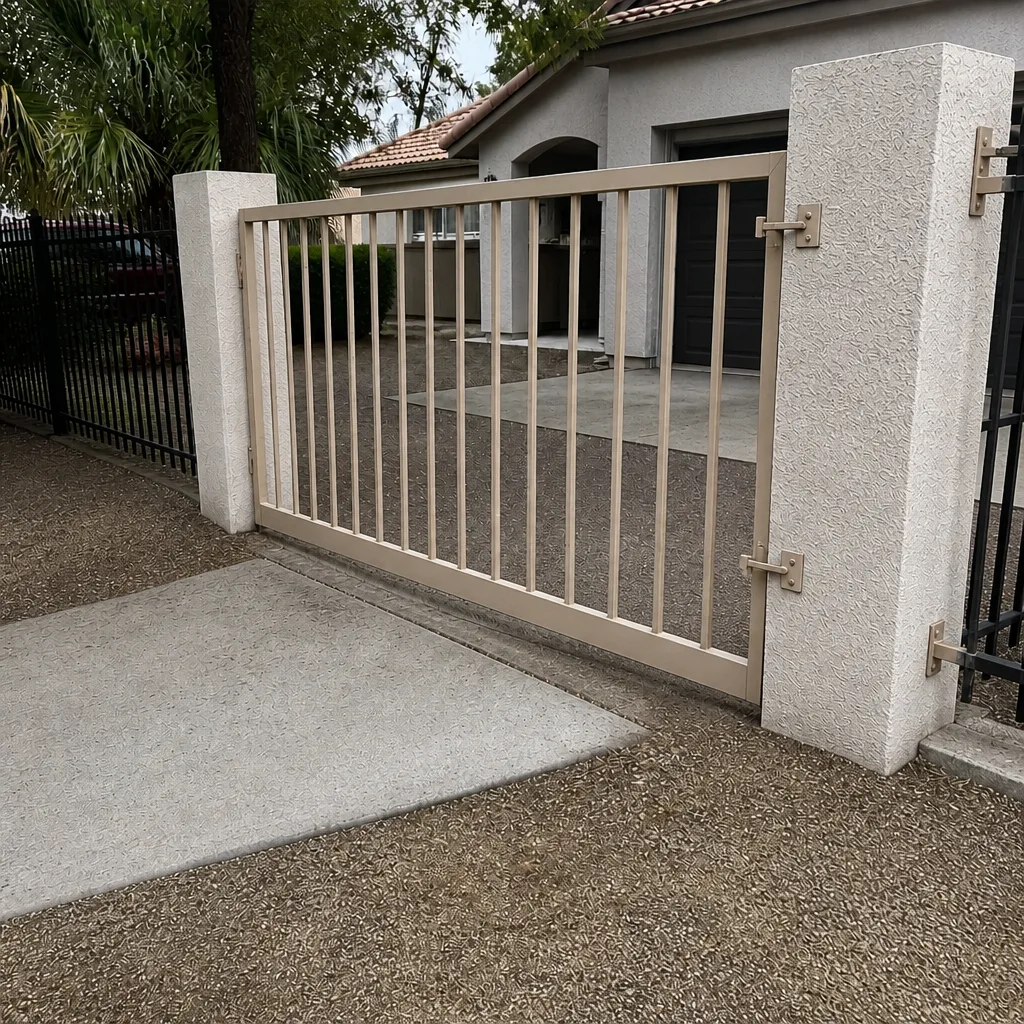
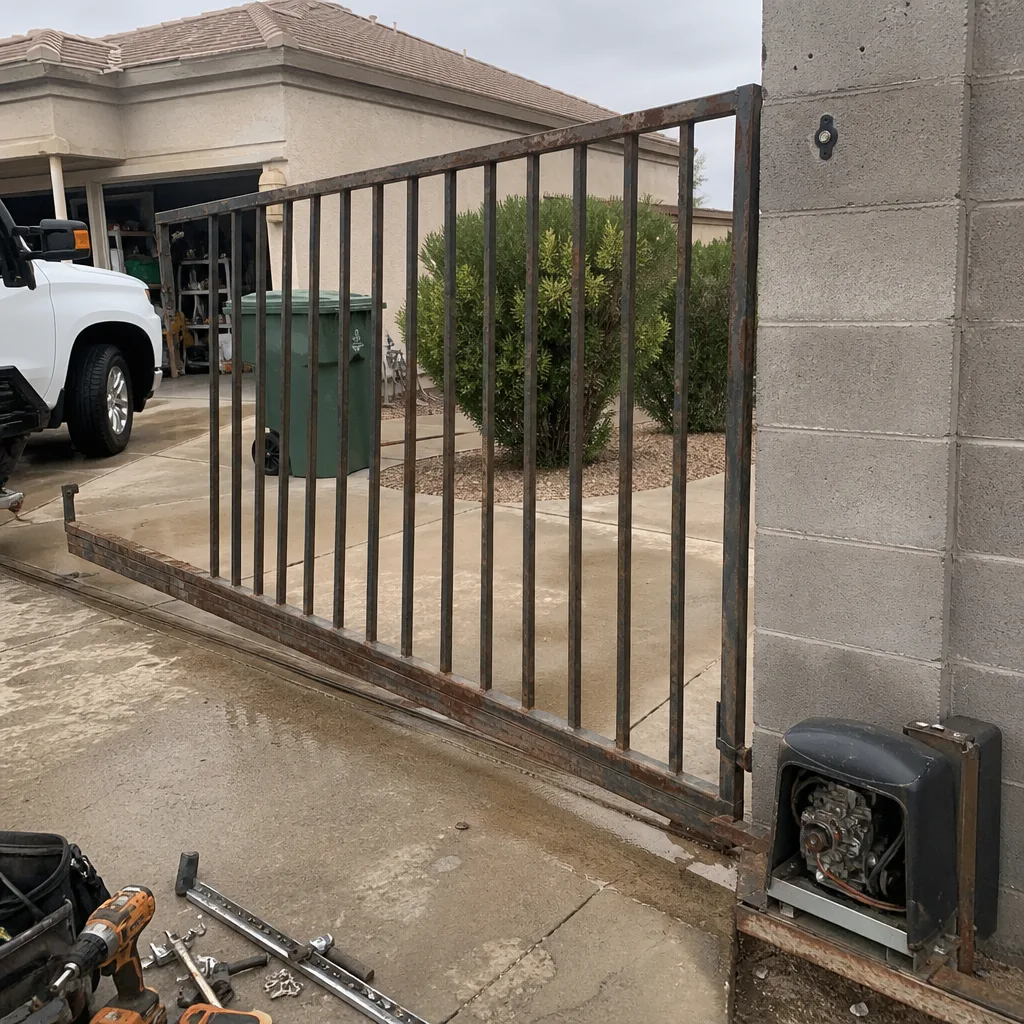
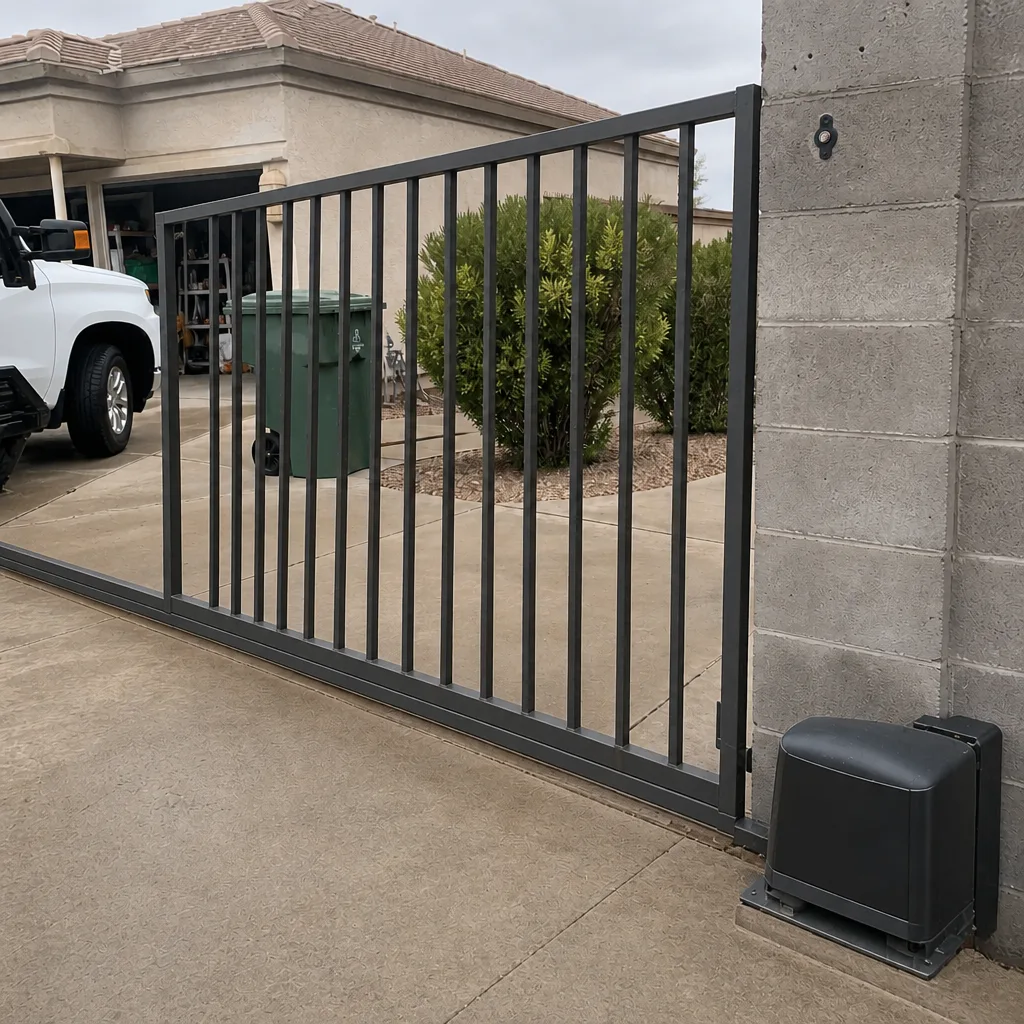
See the difference
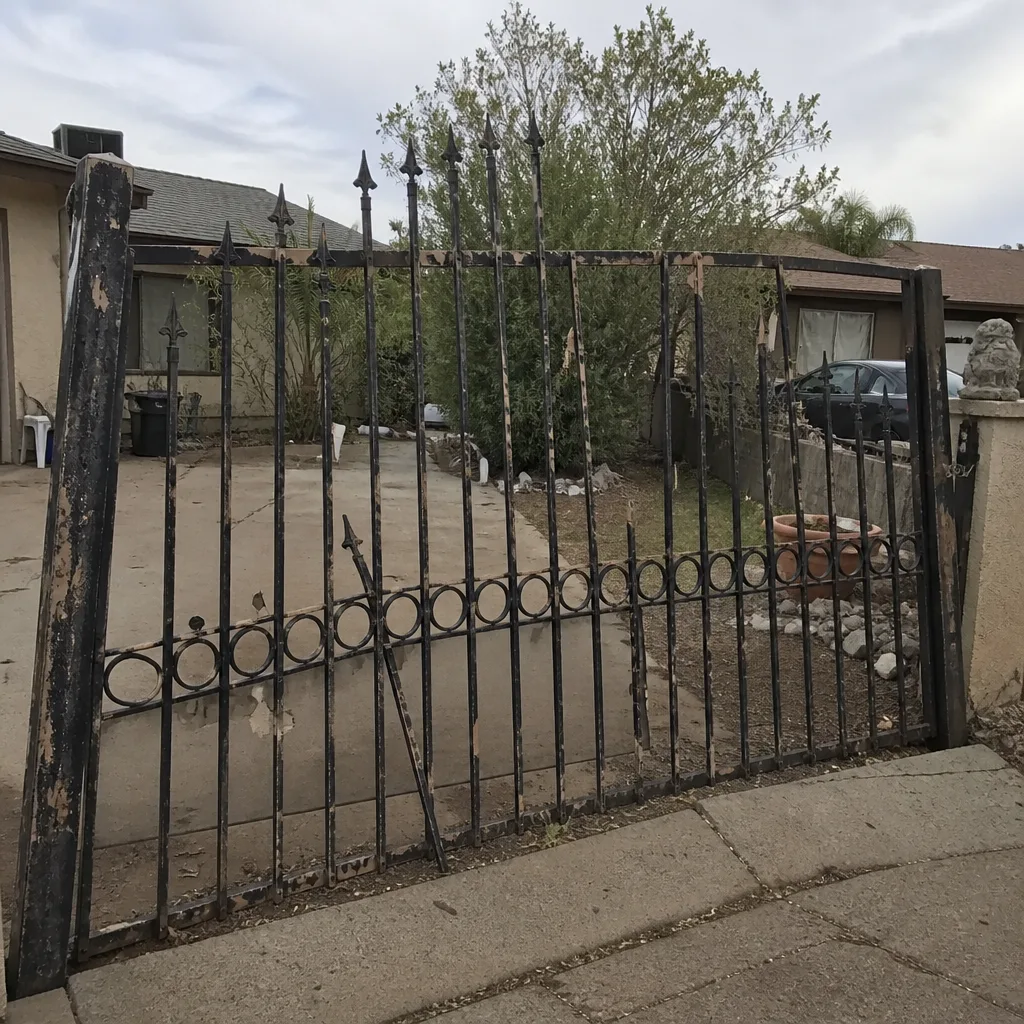 Before
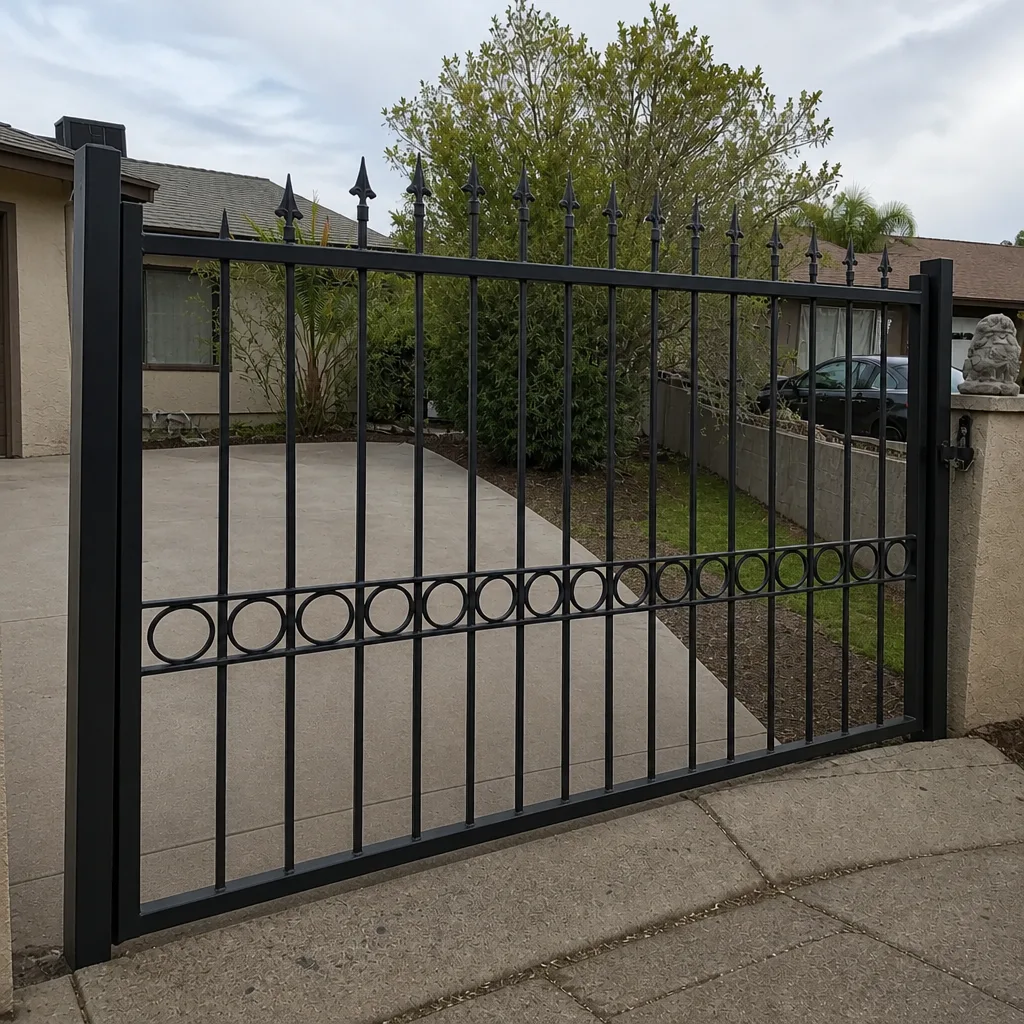 After
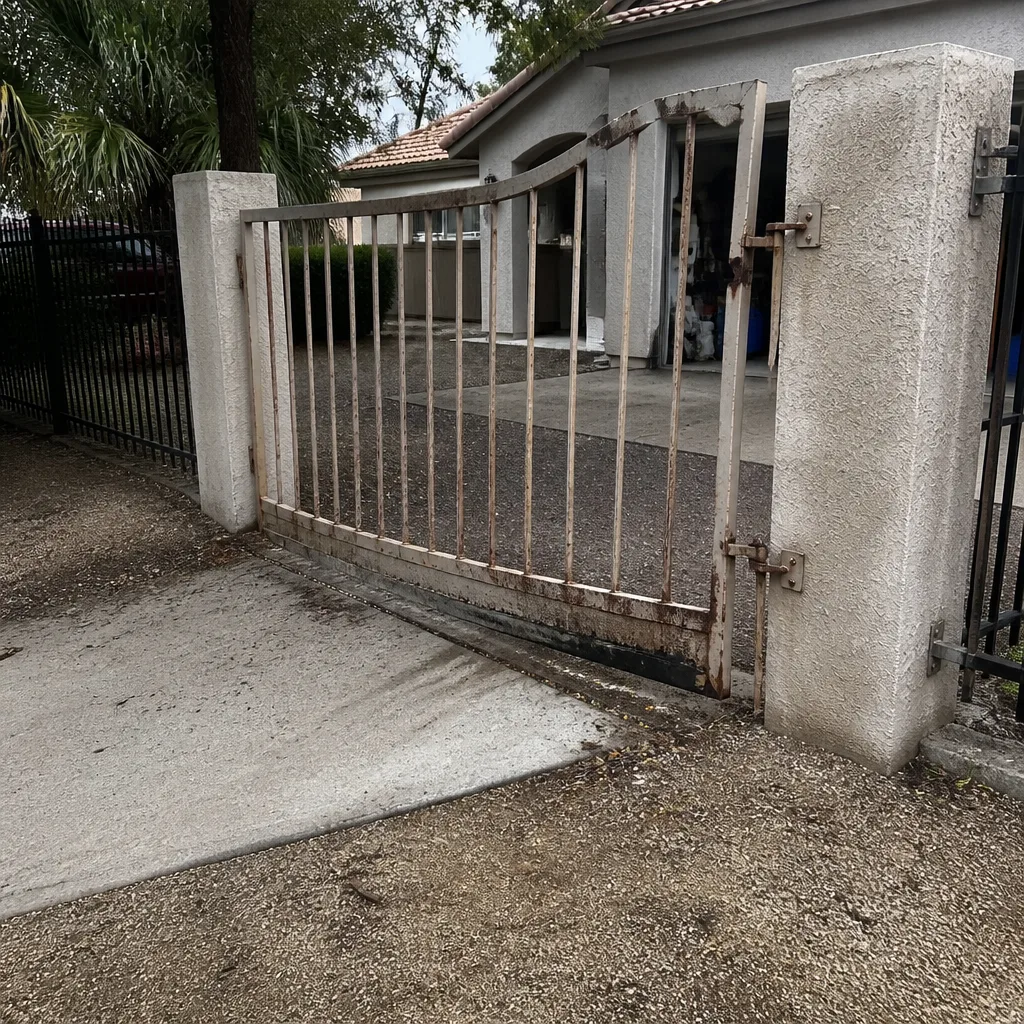 Before
 After
 Before
 After
When to Call a Professional
You should call a gate professional when the automated gate stops fully opening or closing, when the operator cycles erratically or won’t react, when the safety sensors aren’t stopping the gate, when the motor hums but the gate doesn’t move, when the control board throws a fault you don’t recognize, or when the gate is visibly out of alignment. Any of these is a sign not to keep cycling the gate and hoping. Automated systems hold electrical charge and can cause serious injury if you probe them yourself without training, and repeated cycles on a failing operator can turn a small repair into a motor replacement. Gate Repair Surprise offers free estimates in Surprise. Call (877) 657-0401 and we’ll help you get it diagnosed correctly the first time.
Frequently Asked Questions
Check three things: an active Arizona contractor license, a current certificate of general liability insurance, and a workers’ compensation policy. A legitimate contractor provides all three on request and puts the estimate in writing before any work starts. If any of the three is missing, keep looking.
For mechanical issues on a manual gate, a general handyman can sometimes help. For an automated gate with a control board, motor, sensors, or wiring fault, you need a gate specialist. Those components require brand-specific knowledge across operators like LiftMaster, FAAC, Viking, DoorKing, and others, and a generalist will usually end up guessing.
Gate repair pricing depends entirely on the diagnosis: which operator brand, which component failed, and what parts are needed. There’s no honest flat answer because a sensor alignment and a motor replacement are not the same job. A specialist gives you a written estimate before any work starts, so the price is agreed, not guessed at later. Call (877) 657-0401 for a free estimate.
Ask which operator brands they work with, which part model is going in, how they test the safety sensors and reverse function, what the warranty covers, and what happens if the same fault comes back. A gate specialist answers all five without hesitation. A generalist stalls on the technical two.
It can. Manufacturer warranties on parts and operators typically require genuine parts and may require authorized service for coverage to hold. Ask the contractor upfront whether they use genuine parts and whether their work affects your existing warranty. Get the answer in writing.
Many electric gate faults can be diagnosed and repaired the same day once a technician is on site. The actual timeline depends on the component and part availability. Call (877) 657-0401 and we’ll help you schedule a visit. We answer 24/7, with fast dispatch from 7am to 7pm, Sunday through Friday.
The Bottom Line
Hiring a gate repair contractor in Surprise is a vetting process, not a handshake. Verify the license, insurance, and workers’ comp first. Ask the three technical questions: which control board, how do you test the safety sensors, which brands do you work with. Read the quote for line items and treat an unusually low number as a warning. Confirm the parts brand, the warranty terms, and the follow-up process. And hire for the full lifecycle, not just the repair, so you’re not starting over if the system eventually needs replacing. Do those checks, and the contractor who shows up will be the one who can actually fix your gate.
If you’d rather skip the guesswork, we do this all day. Gate Repair Surprise works on whatever gate you have, from LiftMaster and FAAC to DoorKing, Elite, Viking, Ghost Controls, BFT, Linear, and Mighty Mule. Our technicians have up to 13 years of experience across repair, electric gate repair, and new installations. Call (877) 657-0401 for a free estimate. We answer 24/7, with fast dispatch from 7am to 7pm, Sunday through Friday.
Written by the team at Gate Repair Surprise.